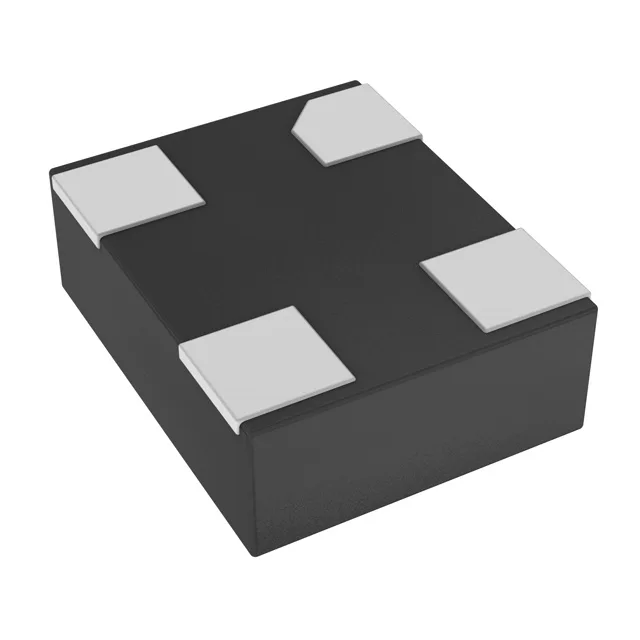
Microchip Technology DSC1001DL2-024.5454T — Crystals & Oscillators

DSC1001DL2-024.5454T MEMS XO 24.5454 MHz AEC-Q100 –

MPNDSC1001DL2-024.5454T
Active

Microchip DSC1001 series MEMS XO, 24.5454 MHz, CMOS output, ±25 ppm stability, AEC-Q100, 4-SMD no-lead package, standby (power down) function.

Independent supplier — new & surplus stockAuthenticity-screened · ESD-safe packingListing updated Aug 2026

Specifications

DSC1001DL2-024.5454T specifications
ParameterValue
TypeXO (Standard)
SeriesDSC1001
MountingSurface Mount
Supply voltage1.8V ~ 3.3V
Current - supply6.3mA
Current - supply (Disable)15µA
Frequency24.5454 MHz
Frequency stability±25ppm
Operating temperature-40°C~105°C
Size (Dimension)0.098\" L x 0.079\" W (2.50mm x 2.00mm)
Height - seated0.035\" (0.90mm)
OutputCMOS
PackageTape & Reel (TR)
RatingsAEC-Q100
FunctionStandby (Power Down)
Base resonatorMEMS
Case4-SMD, No Lead

Product details

The DSC1001DL2-024.5454T is a 24.5454 MHz MEMS-based oscillator (XO) with CMOS output, built for applications that need a clean clock without a quartz crystal's startup and aging quirks.

Standby mode and supply voltage range

The supply voltage accepts 1.8V to 3.3V, covering common logic rails without an extra regulator; the active draw is 6.3 mA max at 24.5454 MHz.

Housed in a 4-SMD no-lead package measuring 2.50 mm x 2.00 mm x 0.90 mm — the same footprint as many standard 2.5 x 2.0 mm quartz oscillators, so it can drop onto an existing PCB layout without a board spin. Supplied on tape and reel; the base product number DSC1001 covers the family, so a single BOM line can serve multiple frequencies by changing the suffix.

Frequently asked questions

Is the DSC1001DL2-024.5454T a direct drop-in replacement for a standard 24.5454 MHz crystal oscillator?

Yes, in most cases. The 4-SMD no-lead footprint matches the common 2.5 x 2.0 mm quartz oscillator land pattern, and the CMOS output is compatible with standard clock inputs. The MEMS resonator eliminates the crystal's startup delay and has better shock/vibration tolerance — a straight swap on the BOM if the supply voltage and enable polarity match.

What does the standby (power down) function do on this oscillator?

When the standby pin is asserted, the oscillator stops and the output goes high-impedance. Supply current drops to 15 µA max, from 6.3 mA running. This lets the system power down the clock tree in sleep mode without a separate load switch.