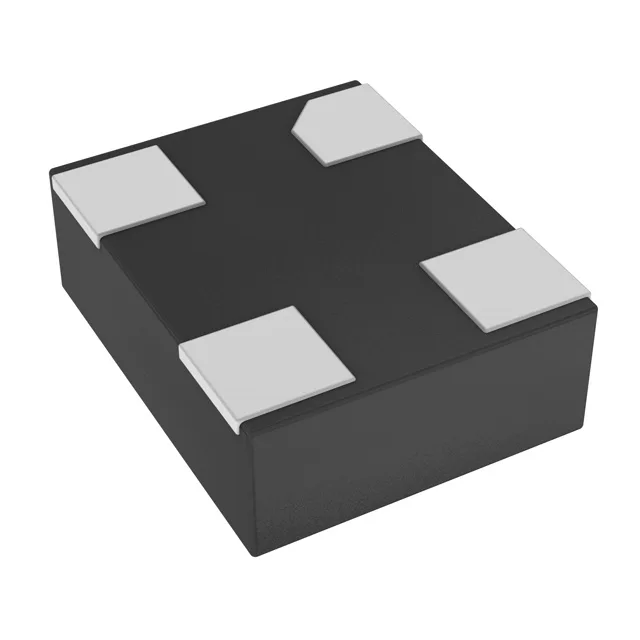
Microchip Technology DSC1001DL1-025.2000 — Crystals & Oscillators

DSC1001DL1-025.2000 MEMS XO – 25.2 MHz, AEC-Q100, 1.8V–3.3V

MPNDSC1001DL1-025.2000
Active

Microchip Technology DSC1001 series, XO (Standard) MEMS oscillator, 25.2 MHz, CMOS output, 4-SMD no-lead package, AEC-Q100 rated, 1.8V–3.3V supply.

$0.9600Ref. price · indicative, final on quote
Independent supplier — new & surplus stockAuthenticity-screened · ESD-safe packingListing updated Aug 2026

Specifications

DSC1001DL1-025.2000 specifications
ParameterValue
TypeXO (Standard)
SeriesDSC1001
MountingSurface Mount
Supply voltage1.8V ~ 3.3V
Current - supply6.3mA
Current - supply (Disable)15µA
Frequency25.2 MHz
Frequency stability±50ppm
Operating temperature-40°C~105°C
Size (Dimension)0.098\" L x 0.079\" W (2.50mm x 2.00mm)
Height - seated0.035\" (0.90mm)
OutputCMOS
PackageTube
RatingsAEC-Q100
FunctionStandby (Power Down)
Base resonatorMEMS
Case4-SMD, No Lead

Product details

The DSC1001DL1-025.2000 is a 25.2 MHz MEMS-based XO (Standard) from Microchip's DSC1001 series, delivering a CMOS output in a 4-SMD, no-lead package measuring 2.50 mm x 2.00 mm. The 1.8V to 3.3V supply range lets it run from any common logic rail without an external regulator — one BOM line covers 1.8V, 2.5V, and 3.3V domains on the same PCB.

In active mode the maximum supply current is 6.3 mA at 25.2 MHz, keeping self-heating negligible inside the 0.90 mm seated-height package — no forced airflow needed in a sealed enclosure.

Frequently asked questions

What is the frequency of DSC1001DL1-025.2000?

25.2 MHz — this is a fixed-frequency oscillator, not a programmable or voltage-controlled device. Confirm your PLL or serial clock divider expects exactly 25.2 MHz before committing the BOM.

Is DSC1001DL1-025.2000 AEC-Q100 qualified?

Yes, it carries an AEC-Q100 rating, which means it has passed automotive-grade reliability stress tests including temperature cycling, ESD, and latch-up.

What does the Standby (Power Down) function do?

When the standby pin is active, the oscillator stops and draws a maximum of 15 µA from the supply. This preserves battery charge in sleep-mode applications such as automotive body controllers or portable instruments.