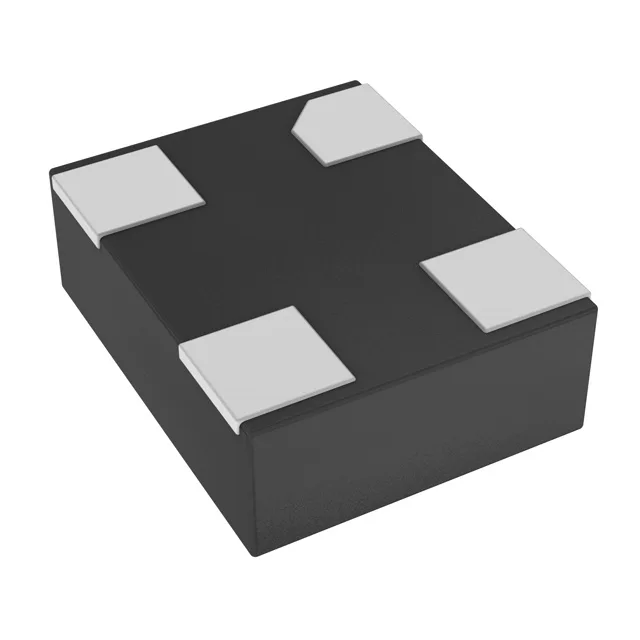
Microchip Technology DSC1001DI5-133.3330 — Crystals & Oscillators

DSC1001DI5-133.3330 MEMS XO, 133.333 MHz, CMOS, AEC-Q100

MPNDSC1001DI5-133.3330
Active

Microchip DSC1001DI5-133.3330, XO (Standard) MEMS oscillator, 133.333 MHz, CMOS output, ±10 ppm stability, 1.8V–3.3V supply, AEC-Q100, 4-SMD 2.5x2.0mm, Enable/Disable, -40°C to 85°C, 8.7 mA max.

$1.9650Ref. price · indicative, final on quote
Independent supplier — new & surplus stockAuthenticity-screened · ESD-safe packingListing updated Aug 2026

Specifications

DSC1001DI5-133.3330 specifications
ParameterValue
TypeXO (Standard)
SeriesDSC1001
MountingSurface Mount
Supply voltage1.8V ~ 3.3V
Current - supply8.7mA
Current - supply (Disable)15µA
Frequency133.333 MHz
Frequency stability±10ppm
Operating temperature-40°C~85°C
Size (Dimension)0.098\" L x 0.079\" W (2.50mm x 2.00mm)
Height - seated0.035\" (0.90mm)
OutputCMOS
PackageTube
RatingsAEC-Q100
FunctionEnable/Disable
Base resonatorMEMS
Case4-SMD, No Lead

Product details

The DSC1001DI5-133.3330 is a MEMS-based XO (Standard) that outputs a fixed 133.333 MHz CMOS clock — a frequency commonly used in Ethernet PHYs, PCIe reference clocks, and high-speed processor cores.

Active production, ready for new designs

Tight stability and low power

Maximum supply current is 8.7 mA (cite:); when the output is disabled via the Enable/Disable pin (cite:), standby current drops to 15 µA (cite:), useful for battery-backed or wake-on-event subsystems.

Frequently asked questions

Is DSC1001DI5-133.3330 AEC-Q100 qualified?

Yes, it carries an AEC-Q100 rating (cite:). That means it has passed automotive-grade qualification testing — temperature cycling, ESD, latch-up, and reliability stress — and is suitable for automotive electronic systems. The OEM auditor will accept PPAP documentation for this part.

Can I replace a quartz oscillator with DSC1001DI5-133.3330?

Yes, if the footprint matches. The DSC1001DI5-133.3330 comes in a 4-SMD, No Lead package measuring 2.50mm x 2.00mm (cite:), a standard quartz oscillator footprint. The output is CMOS (cite:), compatible with most logic families. The MEMS base resonator (cite:) means no crystal aging drift and better shock tolerance than quartz.