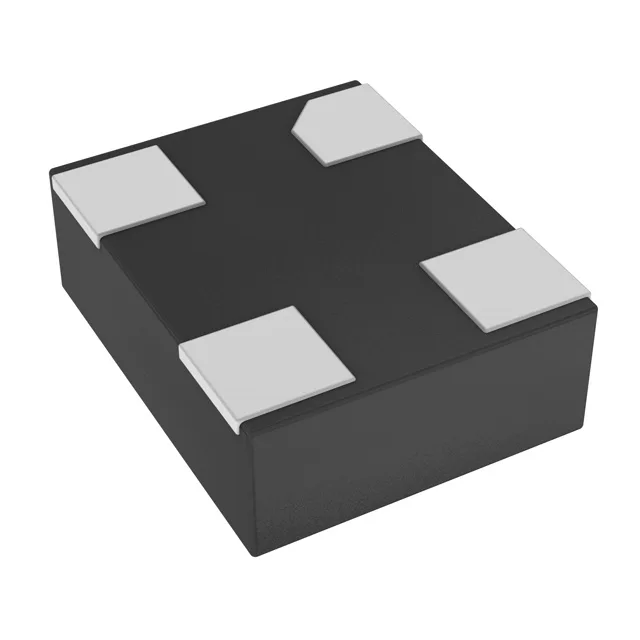
Microchip Technology DSC1001DI5-133.0000T — Crystals & Oscillators

DSC1001DI5-133.0000T MEMS XO, 133 MHz, AEC-Q100, ±10 ppm

MPNDSC1001DI5-133.0000T
Active

Microchip DSC1001DI5-133.0000T, XO (Standard) MEMS oscillator, 133 MHz, CMOS output, ±10 ppm stability, AEC-Q100 qualified, -40 to 85°C, 1.8–3.3V supply, 4-SMD no-lead package.

$2.3400Ref. price · indicative, final on quote
Independent supplier — new & surplus stockAuthenticity-screened · ESD-safe packingListing updated Aug 2026

Specifications

DSC1001DI5-133.0000T specifications
ParameterValue
TypeXO (Standard)
SeriesDSC1001
MountingSurface Mount
Supply voltage1.8V ~ 3.3V
Current - supply8.7mA
Current - supply (Disable)15µA
Frequency133 MHz
Frequency stability±10ppm
Operating temperature-40°C~85°C
Size (Dimension)0.098\" L x 0.079\" W (2.50mm x 2.00mm)
Height - seated0.035\" (0.90mm)
OutputCMOS
PackageTape & Reel (TR)
RatingsAEC-Q100
FunctionStandby (Power Down)
Base resonatorMEMS
Case4-SMD, No Lead

Product details

The 133 MHz frequency with ±10 ppm stability is tight enough for a 100BASE-T1 Ethernet reference clock or a high-speed FPGA configuration oscillator. The supply voltage range spans 1.8V to 3.3V, so the same BOM line can serve a 1.8V core logic rail or a 3.3V peripheral bus without a separate level translator.

The 4-SMD, No Lead package measures 0.098" × 0.079" (2.50 mm × 2.00 mm) with a seated height of 0.035" (0.90 mm). The small body means the solder paste volume and stencil aperture need to be tuned for the pad size; the datasheet's recommended land pattern is the starting point, not the final word.

Frequently asked questions

Is the DSC1001DI5-133.0000T suitable for automotive applications?

Yes. The MEMS resonator also handles vibration better than quartz, which is a plus for engine-bay or chassis-mounted modules.

What is the difference between the DSC1001 and DSC1002 series?

The DSC1001 series (this part) is a standard XO with CMOS output. The DSC1002 series adds a spread-spectrum modulation feature to reduce EMI. For a 133 MHz clock that needs to pass radiated emissions testing, the DSC1002 is the better choice; for a clean, non-modulated reference, the DSC1001 is the right fit.

What is the replacement for the DSC1001DI5-133.0000T if it becomes unavailable?

The part is active with no official successor or second-source listed. Within the DSC1001 family, any 133 MHz variant with the same supply voltage range, stability grade, and package can be substituted — confirm the operating temperature range and AEC-Q100 rating on the specific suffix. Outside the family, pin-compatible MEMS oscillators from SiTime or other vendors share the same 4-SMD footprint, but the AEC-Q100 qualification is specific to this Microchip series.