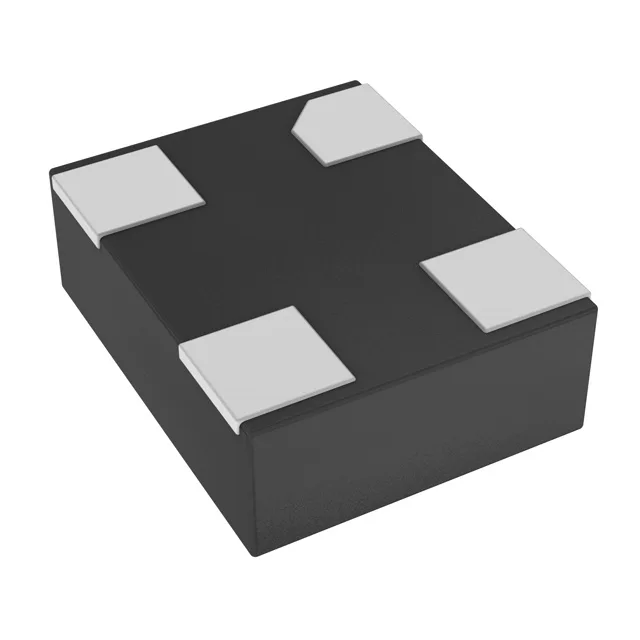
Microchip Technology DSC1001DI5-050.0000 — Crystals & Oscillators

DSC1001DI5-050.0000 – Microchip MEMS XO, 50 MHz, AEC-Q100

MPNDSC1001DI5-050.0000
Active

Microchip Technology DSC1001DI5-050.0000, 50 MHz MEMS XO (Standard), CMOS output, AEC-Q100 qualified, ±10 ppm stability, 1.8V–3.3V supply, enable/disable, -40°C to 85°C, 4-SMD No Lead package.

$2.1000Ref. price · indicative, final on quote
Independent supplier — new & surplus stockAuthenticity-screened · ESD-safe packingListing updated Aug 2026

Specifications

DSC1001DI5-050.0000 specifications
ParameterValue
TypeXO (Standard)
SeriesDSC1001
MountingSurface Mount
Supply voltage1.8V ~ 3.3V
Current - supply7.2mA
Current - supply (Disable)15µA
Frequency50 MHz
Frequency stability±10ppm
Operating temperature-40°C~85°C
Size (Dimension)0.098\" L x 0.079\" W (2.50mm x 2.00mm)
Height - seated0.035\" (0.90mm)
OutputCMOS
PackageTube
RatingsAEC-Q100
FunctionEnable/Disable
Base resonatorMEMS
Case4-SMD, No Lead

Product details

Its AEC-Q100 qualification means it meets the stress and reliability requirements for under-hood automotive electronics, not just cabin or infotainment domains.

Supply flexibility and frequency stability

Operating from any rail between 1.8V and 3.3V, this oscillator covers common logic voltage domains without an external level translator — a single BOM line serves both 1.8V and 3.3V clock trees.

Active lifecycle — sourcing and compliance

AEC-Q100 qualification (Grade 3, covering -40°C to 85°C) is listed, so the part supports PPAP submissions for automotive programs. The 4-SMD No Lead package (2.50mm x 2.00mm footprint) suits reflow assembly with standard lead-free profiles.

Frequently asked questions

Is the DSC1001DI5-050.0000 AEC-Q100 qualified, and what temperature grade does it cover?

Yes, the DSC1001DI5-050.0000 carries an AEC-Q100 rating. This qualification is verified on the part's spec record and supports PPAP documentation for automotive OEM audits.

How does the enable/disable function work on the DSC1001DI5?

The enable/disable function (E/D) allows the output to be tri-stated while the supply voltage remains applied. When disabled, the oscillator draws a maximum of 15 µA, compared to 7.2 mA when active. This lets the system conserve power in low-power sleep or standby modes without cycling the main power rail.