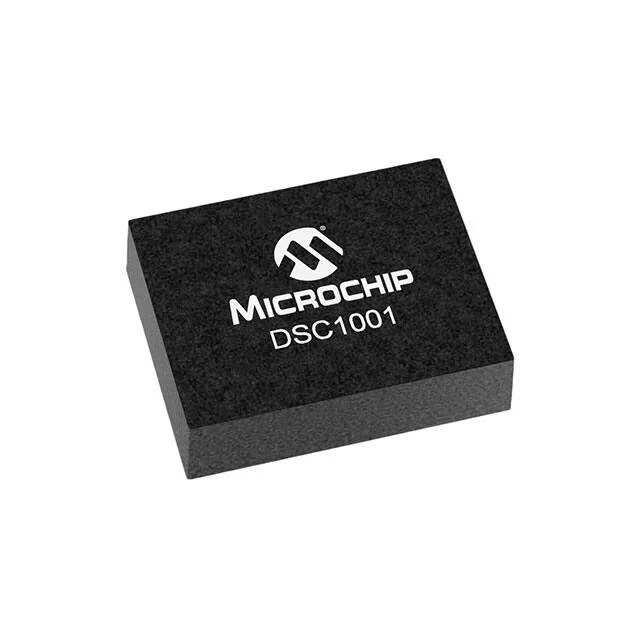
Microchip Technology DSC1001DI5-041.1420T — Crystals & Oscillators

DSC1001DI5-041.1420T MEMS Oscillator – Microchip, 41.142 MHz

MPNDSC1001DI5-041.1420T
Active

Microchip DSC1001 series MEMS XO, 41.142 MHz fixed frequency, CMOS output, ±10 ppm stability, 1.7 V to 3.6 V supply, AEC-Q100, 4-VDFN package, -40°C to 85°C.

Independent supplier — new & surplus stockAuthenticity-screened · ESD-safe packingListing updated Aug 2026

Specifications

DSC1001DI5-041.1420T specifications
ParameterValue
TypeXO (Standard)
SeriesDSC1001
MountingSurface Mount
Supply voltage1.7V ~ 3.6V
Current - supply8mA
Current - supply (Disable)15µA
Frequency41.142 MHz
Frequency stability±10ppm
Operating temperature-40°C~85°C
Size (Dimension)0.098\" L x 0.079\" W (2.50mm x 2.00mm)
Height - seated0.035\" (0.90mm)
OutputCMOS
PackageTape & Reel (TR)
RatingsAEC-Q100
FunctionStandby (Power Down)
Base resonatorMEMS
Case4-VDFN

Product details

Housed in a 4-VDFN package measuring 2.50 mm x 2.00 mm with a seated height of 0.90 mm, the DSC1001DI5-041.1420T fits tight PCB real estate. The 4-pin VDFN footprint is a common MEMS oscillator layout — the same land pattern is shared across the DSC1001 family, so a single footprint covers multiple frequencies in a BOM variant. The VDFN package has no exposed pad, so thermal vias are not required — the part dissipates only 8 mA max and runs cool in normal operation.

The MEMS resonator eliminates quartz supply-chain constraints; the die is a standard Microchip CMOS process. Sourced through independent distribution channels. The DSC1001 series has broad distributor coverage, so lead times are generally short for active parts in this family.

Frequently asked questions

Is DSC1001DI5-041.1420T suitable for automotive applications?

Yes — it carries AEC-Q100 qualification, which means it has passed the automotive-grade reliability tests including temperature cycling, ESD, and latch-up.

What is DSC1001DI5-041.1420T's listed output and type?

It is a standard XO (Standard) oscillator with a CMOS output. The CMOS rail-to-rail swing is compatible with most digital clock inputs — no level translation needed when the supply matches the load logic voltage.