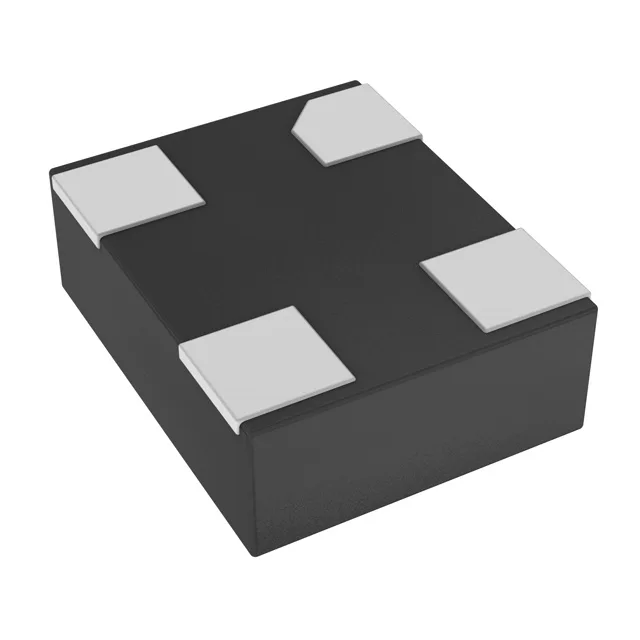
Microchip Technology DSC1001DI5-013.3333T — Crystals & Oscillators

DSC1001DI5-013.3333T MEMS Oscillator 13.3333 MHz AEC-Q100

MPNDSC1001DI5-013.3333T
Active

Microchip Technology DSC1001DI5-013.3333T, XO (Standard) CMOS MEMS oscillator, 13.3333 MHz, ±10ppm stability, 1.8V–3.3V supply, AEC-Q100, active.

$1.7400Ref. price · indicative, final on quote
Independent supplier — new & surplus stockAuthenticity-screened · ESD-safe packingListing updated Aug 2026

Specifications

DSC1001DI5-013.3333T specifications
ParameterValue
TypeXO (Standard)
SeriesDSC1001
MountingSurface Mount
Supply voltage1.8V ~ 3.3V
Current - supply6.3mA
Current - supply (Disable)15µA
Frequency13.3333 MHz
Frequency stability±10ppm
Operating temperature-40°C~85°C
Size (Dimension)0.098\" L x 0.079\" W (2.50mm x 2.00mm)
Height - seated0.035\" (0.90mm)
OutputCMOS
PackageTape & Reel (TR)
RatingsAEC-Q100
FunctionStandby (Power Down)
Base resonatorMEMS
Case4-SMD, No Lead

Product details

The 1.8V to 3.3V supply range covers common logic rails without a secondary regulator — a single 3.3V or 1.8V rail feeds it directly.

For a battery-backed real-time clock or a CAN transceiver that sleeps between bus messages, the disable current is low enough that the oscillator does not dominate the sleep budget.

Frequently asked questions

What is the exact frequency of the DSC1001DI5-013.3333T?

The output frequency is 13.3333 MHz, a standard value used in Ethernet PHYs, USB hubs, and microcontroller clock trees. The CMOS output drives a single-ended load directly without an external termination resistor.

Is the DSC1001DI5-013.3333T compliant with AEC-Q100?

Yes, the DSC1001DI5-013.3333T is rated AEC-Q100, which qualifies it for automotive applications including under-hood and cabin electronics.

Does the DSC1001DI5-013.3333T have a standby or power-down pin?

Yes, the function is listed as Standby (Power Down). When the enable pin is pulled low, the output is disabled and the supply current drops to 15 µA max. This is useful for battery-powered systems that need to wake the oscillator only during active communication periods.