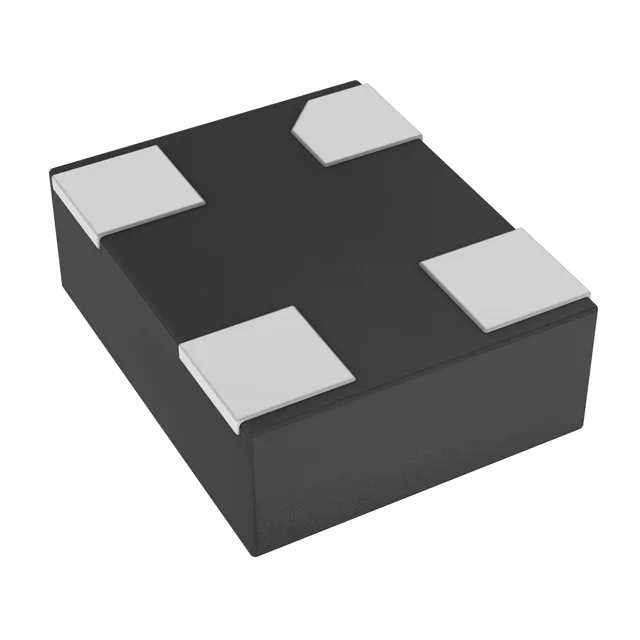
Microchip Technology DSC1001DI4-066.5800T — Crystals & Oscillators

DSC1001DI4-066.5800T MEMS XO – 66.58 MHz, AEC-Q100

MPNDSC1001DI4-066.5800T
Active

Microchip Technology DSC1001DI4-066.5800T, XO (Standard) MEMS oscillator, 66.58 MHz, CMOS output, AEC-Q100 rated, 4-SMD no-lead package, 1.8V–3.3V supply, standby function.

Independent supplier — new & surplus stockAuthenticity-screened · ESD-safe packingListing updated Aug 2026

Specifications

DSC1001DI4-066.5800T specifications
ParameterValue
TypeXO (Standard)
SeriesDSC1001
MountingSurface Mount
Supply voltage1.8V ~ 3.3V
Current - supply7.2mA
Current - supply (Disable)15µA
Frequency66.58 MHz
Operating temperature-40°C ~ 85°C
Size (Dimension)0.098\" L x 0.079\" W (2.50mm x 2.00mm)
Height - seated0.035\" (0.90mm)
OutputCMOS
PackageTape & Reel (TR)
RatingsAEC-Q100
FunctionStandby (Power Down)
Base resonatorMEMS
Case4-SMD, No Lead

Product details

Automotive-grade MEMS timing at 66.58 MHz

Operating from 1.8V to 3.3V, it draws a maximum supply current of 7.2 mA and drops to 15 µA in standby (power-down) mode. The standby function lets the system clock gate the oscillator without an external load switch.

Housed in a 2.50mm x 2.00mm 4-SMD no-lead package (0.90mm seated height), the DSC1001DI4-066.5800T fits tight PCB layouts common in engine control units and body controllers.

Sourced through independent distribution channels.

Frequently asked questions

Is the DSC1001DI4-066.5800T suitable for automotive applications?

Yes. The DSC1001DI4-066.5800T carries an AEC-Q100 rating, which means it has passed the automotive-grade qualification tests for temperature, reliability, and PPAP.

How does the DSC1001DI4-066.5800T compare to quartz oscillators?

The MEMS resonator in the DSC1001DI4-066.5800T offers inherently better resistance to shock and vibration compared to quartz crystals. It also eliminates the need for external load capacitors and startup time concerns. The trade-off is that the frequency tolerance and temperature stability may be slightly wider than a high-end quartz TCXO, but for most automotive digital logic and CAN-FD clocking, the MEMS part meets the jitter and accuracy requirements without additional components.