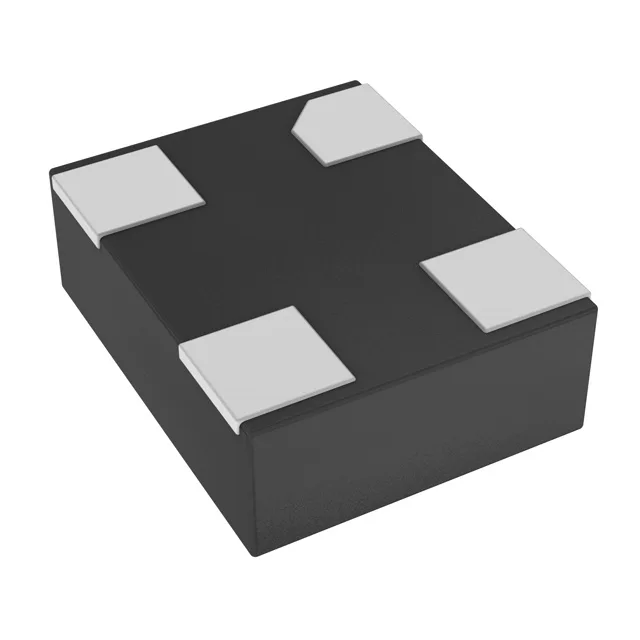
Microchip Technology DSC1001DI2-047.3885 — Crystals & Oscillators

DSC1001DI2-047.3885 MEMS XO 47.3885 MHz CMOS AEC-Q100

MPNDSC1001DI2-047.3885
Active

Microchip Technology DSC1001DI2-047.3885, XO (Standard) MEMS oscillator, 47.3885 MHz CMOS output, ±25ppm frequency stability, AEC-Q100 qualified, 1.8V–3.3V supply, 4-SMD no-lead package.

$0.9450Ref. price · indicative, final on quote
Independent supplier — new & surplus stockAuthenticity-screened · ESD-safe packingListing updated Aug 2026

Specifications

DSC1001DI2-047.3885 specifications
ParameterValue
TypeXO (Standard)
SeriesDSC1001
MountingSurface Mount
Supply voltage1.8V ~ 3.3V
Current - supply7.2mA
Current - supply (Disable)15µA
Frequency47.3885 MHz
Frequency stability±25ppm
Operating temperature-40°C~85°C
Size (Dimension)0.098\" L x 0.079\" W (2.50mm x 2.00mm)
Height - seated0.035\" (0.90mm)
OutputCMOS
PackageTube
RatingsAEC-Q100
FunctionEnable/Disable
Base resonatorMEMS
Case4-SMD, No Lead

Product details

47.3885 MHz MEMS XO with automotive qualification

Supply range, enable function, and low-power standby

Operates from a 1.8V to 3.3V supply rail, so the same BOM line works across 2.5V and 3.3V logic domains without a separate regulator. Active draw is 7.2mA max (cite:) — low enough for a 3.3V rail with minimal thermal impact in the 4-SMD package.

No stock-holding claim — each lot is quoted against the BOM quantity.

Frequently asked questions

Can DSC1001DI2-047.3885 replace a standard 47.3885 MHz quartz oscillator?

Yes — it is a drop-in MEMS replacement for a 47.3885 MHz quartz XO with CMOS output. The ±25ppm stability (cite:) and 1.8-3.3V supply (cite:) match typical quartz specs, and the AEC-Q100 rating (cite:) adds automotive-grade reliability that quartz often lacks. Verify the Enable/Disable polarity and package footprint (2.50mm x 2.00mm, 4-SMD) against your current oscillator before committing.

Does DSC1001DI2-047.3885 meet AEC-Q100 requirements?

This qualifies it for under-hood and cabin electronics where extended temperature and vibration are factors.

What is the frequency stability of DSC1001DI2-047.3885?

This is the total frequency deviation including temperature, supply, and aging effects — sufficient for most MCU and sensor clock domains without additional trimming.