AEC-Q100 qualification qualifies it for automotive under-hood and cabin domains where vibration and thermal cycling exceed quartz crystal limits. The 1.8V–3.3V supply range lets a single BOM line serve 1.8V MCU cores, 2.5V FPGA banks, and 3.3V peripheral buses without a secondary oscillator.
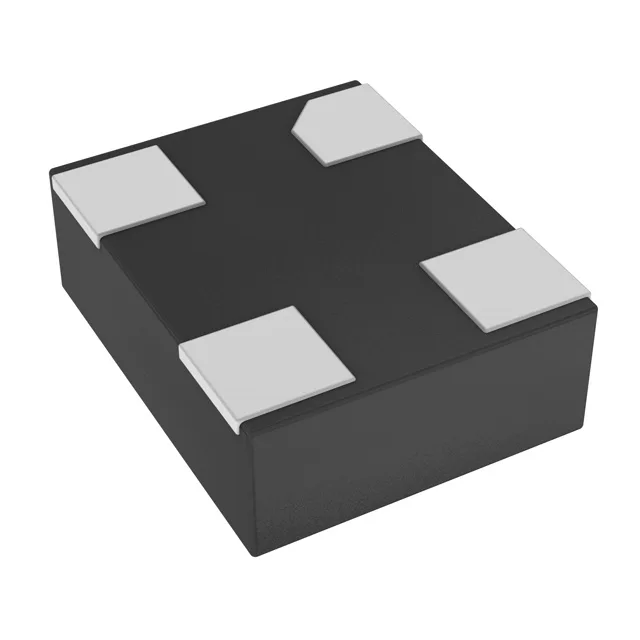
DSC1001DI2-033.3333T MEMS Oscillator – Microchip
MPNDSC1001DI2-033.3333T
Active
Microchip DSC1001DI2-033.3333T, MEMS-based XO (Standard), 33.3333 MHz CMOS output, ±25 ppm stability, AEC-Q100 qualified, -40°C to 85°C, 1.8V–3.3V supply, 4-SMD no-lead package.
$1.1600Ref. price · indicative, final on quote
Independent supplier — new & surplus stockAuthenticity-screened · ESD-safe packingListing updated Aug 2026
Specifications
| Parameter | Value |
|---|---|
| Type | XO (Standard) |
| Series | DSC1001 |
| Mounting | Surface Mount |
| Supply voltage | 1.8V ~ 3.3V |
| Current - supply | 7.2mA |
| Current - supply (Disable) | 15µA |
| Frequency | 33.3333 MHz |
| Frequency stability | ±25ppm |
| Operating temperature | -40°C~85°C |
| Size (Dimension) | 0.098\" L x 0.079\" W (2.50mm x 2.00mm) |
| Height - seated | 0.035\" (0.90mm) |
| Output | CMOS |
| Package | Tape & Reel (TR); Cut Tape (CT) |
| Ratings | AEC-Q100 |
| Function | Standby (Power Down) |
| Base resonator | MEMS |
| Case | 4-SMD, No Lead |
Product details
Frequently asked questions
What does the 'DI2' in DSC1001DI2-033.3333T mean?
The full ordering code is decoded in the DSC1001 datasheet.
Is DSC1001DI2-033.3333T a direct replacement for quartz oscillators?
Yes — the MEMS resonator produces the same 33.3333 MHz CMOS output as a quartz XO, with better shock and vibration tolerance. Pin-compatible with standard 4-pin SMD oscillators; no load-capacitance matching required. The AEC-Q100 rating gives it an edge over quartz in automotive environments.
Does DSC1001DI2-033.3333T have a standby mode?
Yes — the Standby (Power Down) function disables the output and drops supply current to 15 µA max. The part resumes oscillation within the datasheet startup time when the standby pin is de-asserted.