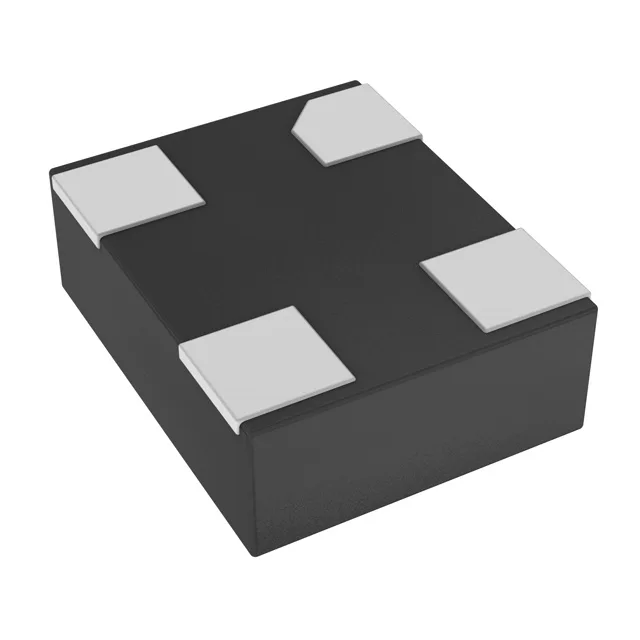
Microchip Technology DSC1001DI2-029.5000T — Crystals & Oscillators

DSC1001DI2-029.5000T MEMS Oscillator

MPNDSC1001DI2-029.5000T
Active

Microchip DSC1001 series MEMS XO (Standard), 29.5 MHz, CMOS output, ±25 ppm stability, AEC-Q100 qualified, 4-SMD no-lead package, standby power-down function.

$1.1600Ref. price · indicative, final on quote
Independent supplier — new & surplus stockAuthenticity-screened · ESD-safe packingListing updated Aug 2026

Specifications

DSC1001DI2-029.5000T specifications
ParameterValue
TypeXO (Standard)
SeriesDSC1001
MountingSurface Mount
Supply voltage1.8V ~ 3.3V
Current - supply7.2mA
Current - supply (Disable)15µA
Frequency29.5 MHz
Frequency stability±25ppm
Operating temperature-40°C~85°C
Size (Dimension)0.098\" L x 0.079\" W (2.50mm x 2.00mm)
Height - seated0.035\" (0.90mm)
OutputCMOS
PackageTape & Reel (TR)
RatingsAEC-Q100
FunctionStandby (Power Down)
Base resonatorMEMS
Case4-SMD, No Lead

Product details

The DSC1001DI2-029.5000T is a 29.5 MHz MEMS-based clock oscillator from Microchip's DSC1001 series, qualified to AEC-Q100 — the automotive IC reliability standard.

Standby mode cuts supply to 15 µA

For a body controller or sensor module that sleeps most of the time, this idle current is low enough to skip a dedicated load switch — the oscillator's own disable pin handles the power gating.

Frequently asked questions

Where can I buy DSC1001DI2-029.5000T and request a quote?

No stock-holding claim is made; availability is verified per inquiry.

What does the standby (power down) function do on the DSC1001DI2-029.5000T?

When the standby pin is asserted, the oscillator stops its internal MEMS drive and places the output in high-impedance. Supply current drops from 7.2 mA max to 15 µA max, preserving battery charge during idle periods. The output resumes within the start-up time after the standby signal is released.

Is the DSC1001DI2-029.5000T a direct replacement for a quartz crystal oscillator?

Yes — it is a MEMS-based XO (standard oscillator) with CMOS output, so it drops into the same 4-pin, 2.5 mm × 2.0 mm no-lead footprint as a quartz oscillator. The AEC-Q100 qualification and ±25 ppm stability over -40°C to +85°C make it a suitable upgrade for automotive designs where quartz may suffer from vibration-induced frequency shifts.