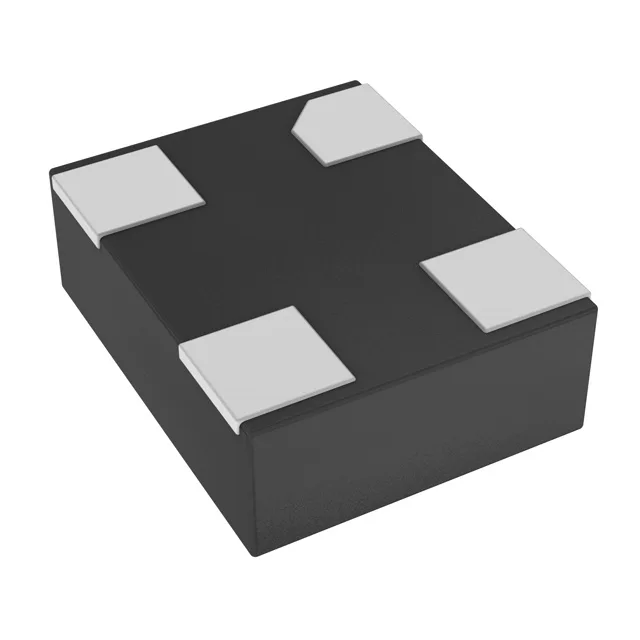
Microchip Technology DSC1001DI2-008.0000T — Crystals & Oscillators

DSC1001DI2-008.0000T MEMS Oscillator 8 MHz AEC-Q100 -

MPNDSC1001DI2-008.0000T
Active

Microchip Technology DSC1001DI2-008.0000T, XO (Standard) 8 MHz CMOS output, MEMS resonator, AEC-Q100, -40°C to 85°C, 2.50mm x 2.00mm 4-SMD package, Tape & Reel.

$1.2150Ref. price · indicative, final on quote
Sourced new & surplus through independent channelsAuthenticity-screened · ESD-safe packingListing updated Aug 2026

Specifications

DSC1001DI2-008.0000T specifications
ParameterValue
TypeXO (Standard)
SeriesDSC1001
MountingSurface Mount
Voltage1.8V ~ 3.3V
Current - supply6.3mA
Current - supply (Disable)15µA
Frequency8 MHz
Frequency stability±25ppm
Operating temperature-40°C~85°C
Size (Dimension)0.098\" L x 0.079\" W (2.50mm x 2.00mm)
Height - seated0.035\" (0.90mm)
OutputCMOS
PackageTape & Reel (TR)
RatingsAEC-Q100
FunctionStandby (Power Down)
Base resonatorMEMS
Case4-SMD, No Lead

Product details

The DSC1001DI2-008.0000T is a fixed-frequency 8 MHz XO (Standard) from Microchip's DSC1001 series, built on a MEMS resonator rather than a quartz crystal. The CMOS output and 1.8V to 3.3V supply range let it drop into most digital timing trees without a level translator. AEC-Q100 qualification means this part has passed the automotive-grade reliability stress suite — temperature cycling, ESD, latch-up — and is suitable for under-hood or cabin electronics where the ambient hits -40°C to 85°C.

Frequency stability and power budget for the BOM

Frequency stability is ±25 ppm — tight enough for a CAN bus or MCU clock where the total timing error budget across temperature and aging stays under 100 ppm. The max supply current is 6.3 mA; in standby (power-down) the disable current drops to 15 µA, which matters for battery-backed modules that sleep between wake cycles.

Frequently asked questions

Is the DSC1001DI2-008.0000T AEC-Q100 qualified?

Yes, it carries AEC-Q100 ratings, which means it has passed automotive-grade reliability testing including temperature cycling, ESD, and latch-up.

What is the difference between MEMS and quartz oscillators for this part?

The DSC1001DI2-008.0000T uses a MEMS resonator instead of a quartz crystal. MEMS oscillators are generally more shock- and vibration-tolerant than quartz, and they do not require external load capacitors. The trade-off is that the frequency stability (±25 ppm,) is comparable to a basic quartz oscillator but not as tight as a TCXO.