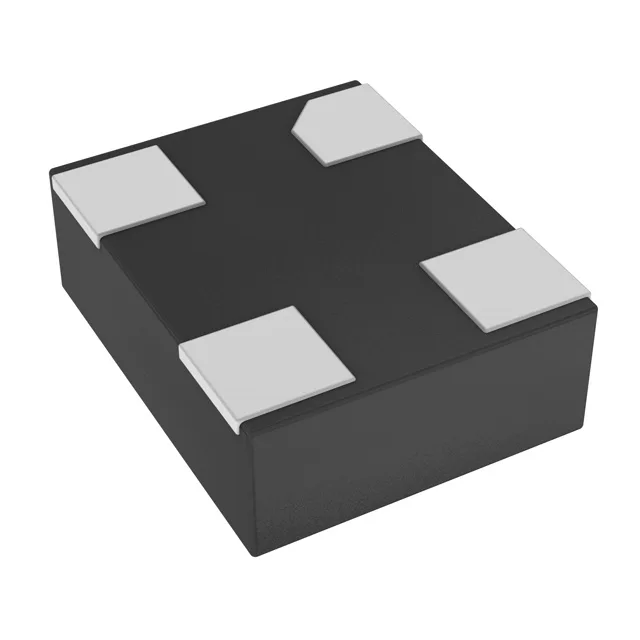
Microchip Technology DSC1001DI2-001.8432T — Crystals & Oscillators

DSC1001DI2-001.8432T MEMS Oscillator 1.8432 MHz AEC-Q100

MPNDSC1001DI2-001.8432T
Active

Microchip Technology DSC1001DI2-001.8432T, MEMS-based XO (Standard), 1.8432 MHz CMOS output, ±25 ppm stability, 1.8V–3.3V supply, AEC-Q100 qualified, -40°C to +85°C, 4-SMD package.

Independent supplier — new & surplus stockAuthenticity-screened · ESD-safe packingListing updated Aug 2026

Specifications

DSC1001DI2-001.8432T specifications
ParameterValue
TypeXO (Standard)
SeriesDSC1001
MountingSurface Mount
Supply voltage1.8V ~ 3.3V
Current - supply6.3mA
Current - supply (Disable)15µA
Frequency1.8432 MHz
Frequency stability±25ppm
Operating temperature-40°C~85°C
Size (Dimension)0.098\" L x 0.079\" W (2.50mm x 2.00mm)
Height - seated0.035\" (0.90mm)
OutputCMOS
PackageTape & Reel (TR)
RatingsAEC-Q100
FunctionStandby (Power Down)
Base resonatorMEMS
Case4-SMD, No Lead

Product details

It operates from a 1.8V to 3.3V supply rail, drawing a maximum of 6.3 mA, and drops to 15 µA in standby mode.

What the AEC-Q100 rating means for fit

Supply voltage and output compatibility

With a supply range of 1.8V to 3.3V, this oscillator can be powered directly from a 1.8V core rail, a 2.5V I/O rail, or a 3.3V peripheral rail without an intermediate LDO. The 1.8432 MHz frequency is a common baud-rate base for UART and CAN controllers, and the ±25 ppm stability keeps the bit timing within tolerance over temperature.

For an automotive module that wakes periodically on a CAN message, the oscillator's standby current adds negligible drain to the battery-backed sleep budget.

Frequently asked questions

Is the DSC1001DI2-001.8432T qualified for automotive applications?

Yes, it is AEC-Q100 qualified.

What is the output type of the DSC1001DI2-001.8432T?

The output is CMOS, rail-to-rail swing, which directly drives the clock input of most MCUs, FPGAs, and communication controllers without level translation.

What is the frequency tolerance of the DSC1001DI2-001.8432T?

This is sufficient for CAN, UART, and most industrial communication protocols.