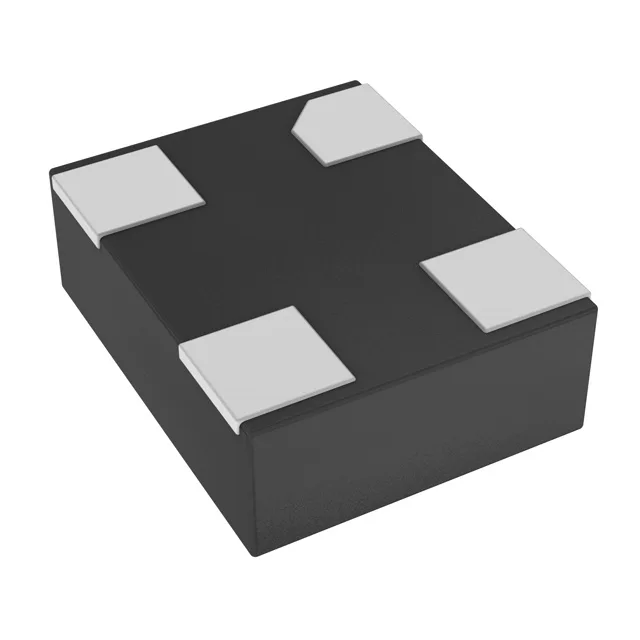
Microchip Technology DSC1001DI1-125.0000 — Crystals & Oscillators

DSC1001DI1-125.0000 MEMS XO — 125 MHz, CMOS, AEC-Q100

MPNDSC1001DI1-125.0000
Active

Microchip DSC1001DI1-125.0000, XO (Standard), 125 MHz, CMOS output, MEMS resonator, 4-SMD no-lead package, AEC-Q100 rated, -40°C to 85°C.

Independent supplier — new & surplus stockAuthenticity-screened · ESD-safe packingListing updated Aug 2026

Specifications

DSC1001DI1-125.0000 specifications
ParameterValue
TypeXO (Standard)
SeriesDSC1001
MountingSurface Mount
Supply voltage1.8V ~ 3.3V
Current - supply8.7mA
Current - supply (Disable)15µA
Frequency125 MHz
Frequency stability±50ppm
Operating temperature-40°C~85°C
Size (Dimension)0.098\" L x 0.079\" W (2.50mm x 2.00mm)
Height - seated0.035\" (0.90mm)
OutputCMOS
PackageTube
RatingsAEC-Q100
FunctionStandby (Power Down)
Base resonatorMEMS
Case4-SMD, No Lead

Product details

125 MHz MEMS oscillator — automotive grade

CMOS output, supply range 1.8–3.3 V — it runs off the same rails as most SoC and FPGA clock inputs without a separate regulator. That puts it in the automotive cabin and outdoor industrial domain — engine bay is out, but dash, infotainment, and body controllers are a clean fit.

Current draw and standby power-down

Max supply current is 8.7 mA at 125 MHz — low enough that a 100 mA LDO can feed this plus a handful of other low-power peripherals without thermal worry.

4-SMD no-lead package, 2.50 x 2.00 mm footprint. No exposed pad to route; just two supply and two output pins, so fan-out is straightforward on a two-layer board.

Product status is Active.

Frequently asked questions

Does DSC1001DI1-125.0000 have AEC-Q100 certification?

Yes — it carries AEC-Q100 ratings. That means it has passed automotive-grade reliability stress, temperature cycling, and ESD tests per the standard.

Can DSC1001DI1-125.0000 replace a standard quartz oscillator?

Functionally yes — it is a drop-in replacement for a 125 MHz quartz XO with CMOS output in the same 4-SMD footprint. The MEMS resonator is inherently more shock- and vibration-tolerant than a quartz blank, which matters in automotive and industrial environments. Confirm the supply voltage range (1.8–3.3 V) matches your existing oscillator.