The AEC-Q100 rating means it has passed automotive-grade temperature cycling, ESD, and reliability stress — it belongs on an engine ECU, a transmission controller, or an ADAS camera module, not just a lab bench. The supply voltage range of 1.8 V to 3.3 V covers the three most common logic rails, letting you reuse the same BOM entry across a 1.8 V core and a 3.3 V peripheral bus without swapping oscillators.
Standby power-down for battery-conscious designs
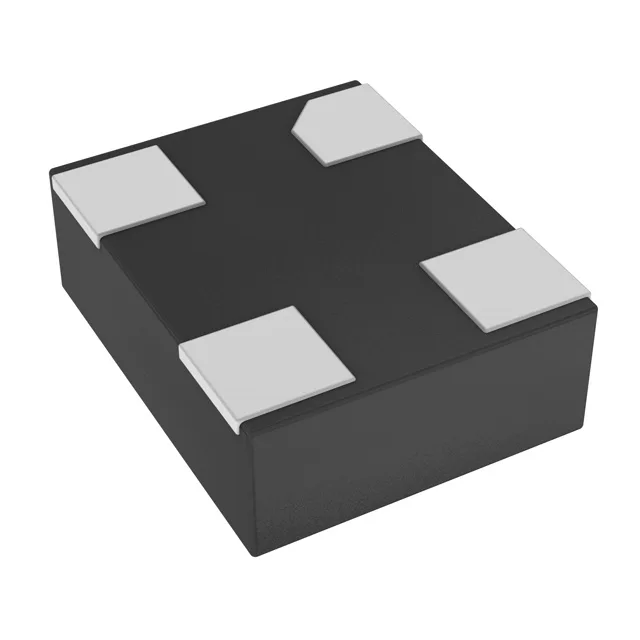
That 420× reduction lets a telematics unit or a key-fob module keep the oscillator off during deep sleep and wake it only when the bus needs a clock — a meaningful battery-life extension for a device that sleeps 99 % of the time. Frequency stability is ±50 ppm — tight enough for a CAN or LIN node, though a precision GPS or Ethernet PHY would want a tighter grade. The 4-SMD, No Lead package measures 2.50 mm x 2.00 mm with a seated height of 0.90 mm, fitting into a compact sensor module or a handheld tool without crowding adjacent passives.
The base product number is DSC1001, so if you need a different frequency or stability grade, the family has a pin-compatible sibling without a board spin. CT works for prototypes or small-batch builds.