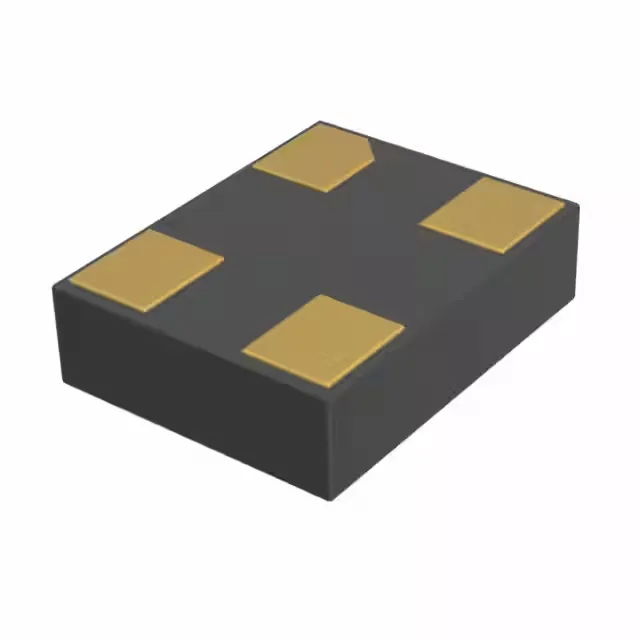
Microchip Technology DSC1001DE3-080.0000 — Crystals & Oscillators

DSC1001DE3-080.0000 MEMS Oscillator 80 MHz AEC-Q100

MPNDSC1001DE3-080.0000
Active

Microchip Technology DSC1001DE3-080.0000, XO (Standard) MEMS oscillator, 80 MHz, CMOS output, AEC-Q100, standby power-down, -20°C to 70°C, 4-VDFN package.

Independent supplier — new & surplus stockAuthenticity-screened · ESD-safe packingListing updated Aug 2026

Specifications

DSC1001DE3-080.0000 specifications
ParameterValue
TypeXO (Standard)
SeriesDSC1001
MountingSurface Mount
Supply voltage1.8V ~ 3.3V
Current - supply16.6mA
Current - supply (Disable)15µA
Frequency80 MHz
Operating temperature-20°C~70°C
Size (Dimension)0.098\" L x 0.079\" W (2.50mm x 2.00mm)
Height - seated0.035\" (0.90mm)
OutputCMOS
PackageTube
RatingsAEC-Q100
FunctionStandby (Power Down)
Base resonatorMEMS
Case4-VDFN
Absolute pull range±20ppm

Product details

The 80 MHz frequency suits high-speed serial interfaces (Ethernet, PCIe reference clocks) and processor core timing where a quartz crystal would need a separate PLL to reach that rate.

Standby power-down for battery-backed designs

In a battery-backed ECU or sensor module that spends most of its life asleep, this cuts the oscillator's draw from 16.6 mA to near-zero — the disable current is lower than the self-discharge of a typical coin cell.

Frequently asked questions

Does the DSC1001DE3-080.0000 have AEC-Q100 qualification?

Yes, the DSC1001DE3-080.0000 is rated AEC-Q100.

Is the DSC1001DE3-080.0000 a direct replacement for a standard quartz oscillator?

Functionally yes — it provides the same 80 MHz CMOS clock output as a quartz XO, but the MEMS resonator is more shock- and vibration-tolerant than a quartz crystal. The 4-VDFN package is a standard footprint, so it drops onto the same PCB pads as many quartz oscillators. However, the AEC-Q100 rating and the standby power-down feature are not available on most quartz parts.

What is the standby power-down feature on the DSC1001DE3-080.0000?

The Standby (Power Down) function disables the oscillator output and reduces the supply current to 15 µA max. This is useful for battery-backed systems that need to preserve power during idle periods while keeping the oscillator ready to wake on a control signal.