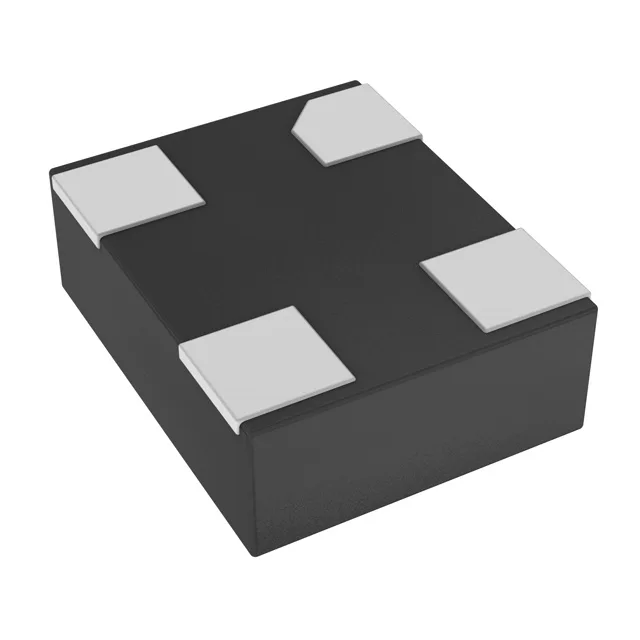
Microchip Technology DSC1001DE2-027.0000 — Crystals & Oscillators

DSC1001DE2-027.0000 – 27 MHz MEMS XO, CMOS

MPNDSC1001DE2-027.0000
Active

Microchip DSC1001DE2-027.0000, MEMS-based XO (Standard), 27 MHz CMOS output, ±25ppm stability, AEC-Q100 qualified, 1.8-3.3V supply, 4-SMD 2.5mm x 2.0mm

$1.1200Ref. price · indicative, final on quote
Independent supplier — new & surplus stockAuthenticity-screened · ESD-safe packingListing updated Aug 2026

Specifications

DSC1001DE2-027.0000 specifications
ParameterValue
TypeXO (Standard)
SeriesDSC1001
MountingSurface Mount
Supply voltage1.8V ~ 3.3V
Current - supply8mA
Frequency27 MHz
Frequency stability±25ppm
Operating temperature-20°C~70°C
Size (Dimension)0.098\" L x 0.079\" W (2.50mm x 2.00mm)
Height - seated0.035\" (0.90mm)
OutputCMOS
PackageTube
RatingsAEC-Q100
FunctionStandby (Power Down)
Base resonatorMEMS
Case4-SMD, No Lead

Product details

Runs from any rail between 1.8V and 3.3V — a single BOM line covers 1.8V, 2.5V, or 3.3V logic without a separate regulator.

Housed in a 4-SMD, No Lead package measuring 2.50mm x 2.00mm with a seated height of 0.90mm. The 0.098" x 0.079" footprint is a common MEMS oscillator land pattern; the four pads map to VDD, GND, output, and enable/standby. No thermal pad — standard reflow profile for 4-lead ceramic or plastic SMD packages applies. Supplied in tube; also available in tape-and-reel for automated pick-and-place. Surface-mount mounting only — hand-solder not recommended for volume.

Frequently asked questions

How can I order DSC1001DE2-027.0000 and check current pricing?

Submit an RFQ for your target quantity. Price depends on volume, date-code preference, and packaging (tube vs reel).

Is DSC1001DE2-027.0000 AEC-Q100 qualified?

Yes. The ratings field explicitly lists AEC-Q100 qualification, meaning it passed the automotive-grade stress tests (temperature cycling, ESD, latch-up). Suitable for under-hood and cabin electronics where extended temperature range and reliability are required.

What does the 'Standby (Power Down)' function do?

When the enable pin is pulled low, the oscillator enters a low-power standby state. Output is disabled, and supply current drops to microamp levels — useful for battery-powered or intermittently active systems where the clock can be gated off between operations.