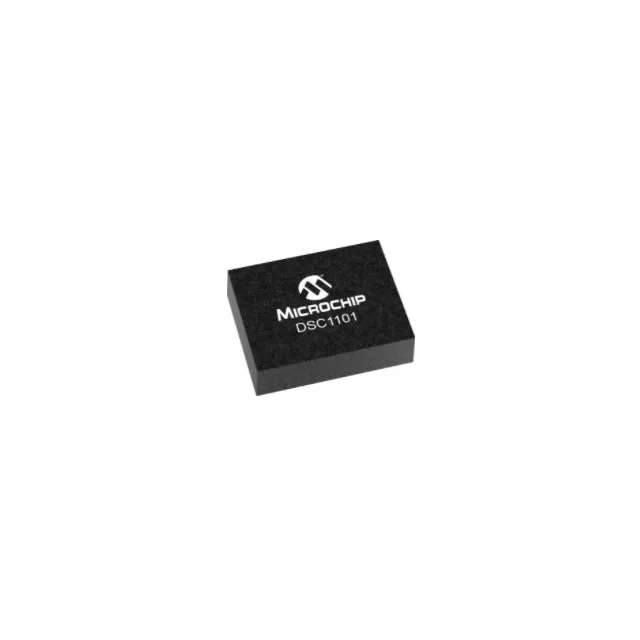
Microchip Technology DSC1001DE2-020.0000 — Crystals & Oscillators

DSC1001DE2-020.0000 XO 20 MHz CMOS MEMS Oscillator –

MPNDSC1001DE2-020.0000
Active

Microchip DSC1001 series MEMS XO (Standard), 20 MHz CMOS output, ±25ppm stability, 1.8V–3.3V supply, AEC-Q100, standby (power down) function, 4-SMD no-lead package

$1.2300Ref. price · indicative, final on quote
Sourced new & surplus through independent channelsAuthenticity-screened · ESD-safe packingListing updated Aug 2026

Specifications

DSC1001DE2-020.0000 specifications
ParameterValue
TypeXO (Standard)
SeriesDSC1001
MountingSurface Mount
Voltage1.8V ~ 3.3V
Current - supply8mA
Current - supply (Disable)15µA
Frequency20 MHz
Frequency stability±25ppm
Operating temperature-20°C~70°C
Size (Dimension)0.126\" L x 0.098\" W (3.20mm x 2.50mm)
Height - seated0.035\" (0.90mm)
OutputCMOS
PackageTube
RatingsAEC-Q100
FunctionStandby (Power Down)
Base resonatorMEMS
Case4-SMD, No Lead

Product details

MEMS XO with AEC-Q100 and standby – the timing fit for automotive and battery-edge designs

For under-hood or cabin modules that see 85°C ambient, verify the part's temperature grade against the system's thermal profile; the AEC-Q100 rating covers reliability stress but the temperature range itself is not extended.

The supply voltage range spans 1.8 V to 3.3 V, so the same order code works across a 1.8 V core rail and a 3.3 V I/O rail without a separate level translator or a different oscillator variant. Frequency stability is ±25 ppm, which is tight enough for a 20 MHz clock feeding an MCU PLL or a CAN transceiver reference. Maximum supply current is 8 mA during active operation. Combined with the 15 µA standby draw, the part fits power budgets where the system sleeps between periodic wake-ups – a telematics control unit polling a sensor once per second, for example.

Frequently asked questions

Does DSC1001DE2-020.0000 have a standby (power down) function?

Yes – the standby function is listed on the device. When disabled, the supply current drops to 15 µA max, compared to 8 mA during active operation.