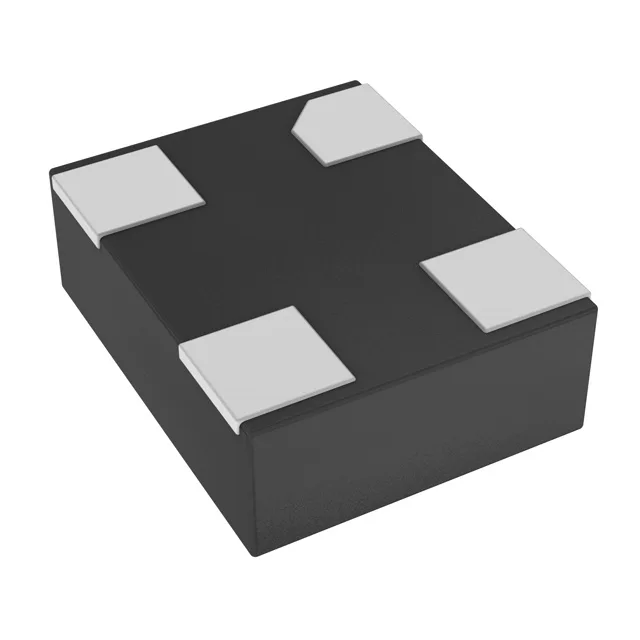
Microchip Technology DSC1001DE1-100.0000 — Crystals & Oscillators

DSC1001DE1-100.0000 – Microchip MEMS XO, 100 MHz, AEC-Q100

MPNDSC1001DE1-100.0000
Active

Microchip Technology DSC1001DE1-100.0000, DSC1001 series, XO (Standard) MEMS oscillator, 100 MHz CMOS output, AEC-Q100 qualified, 1.8V~3.3V supply, standby (power down) function, 4-SMD no-lead package.

$1.0200Ref. price · indicative, final on quote
Sourced new & surplus through independent channelsAuthenticity-screened · ESD-safe packingListing updated Aug 2026

Specifications

DSC1001DE1-100.0000 specifications
ParameterValue
TypeXO (Standard)
SeriesDSC1001
MountingSurface Mount
Voltage1.8V ~ 3.3V
Current - supply8.7mA
Current - supply (Disable)15µA
Frequency100 MHz
Frequency stability±50ppm
Operating temperature-20°C~70°C
Size (Dimension)0.098\" L x 0.079\" W (2.50mm x 2.00mm)
Height - seated0.035\" (0.90mm)
OutputCMOS
PackageTube
RatingsAEC-Q100
FunctionStandby (Power Down)
Base resonatorMEMS
Case4-SMD, No Lead

Product details

The DSC1001DE1-100.0000 is an AEC-Q100 qualified MEMS-based XO (Standard) delivering a 100 MHz CMOS output — a common reference for automotive SoCs, Ethernet PHYs, and ADAS processors that need a clean clock without the shock sensitivity of a quartz crystal. Supply voltage spans 1.8V to 3.3V, letting a single oscillator serve both the core and I/O voltage domains on a mixed-rail board without an extra LDO.

Package and Temperature Range for Automotive Fit

Housed in a 4-SMD, no-lead package measuring 2.50 mm x 2.00 mm with a seated height of 0.90 mm — the compact footprint suits space-constrained ECU and sensor module layouts. Rated for -20°C to +70°C operating temperature, which aligns with passenger-cabin electronics; for under-hood or engine-bay applications, the AEC-Q100 qualification adds the reliability stress screening, but the temperature range itself is cabin-grade.

Frequently asked questions

Is the DSC1001DE1-100.0000 AEC-Q100 qualified?

Yes, it carries AEC-Q100 ratings, making it suitable for automotive applications that require the reliability stress screening and PPAP documentation.

What does the standby (power down) function do?

The standby function disables the output and reduces supply current to 15 µA max, enabling the oscillator to be gated during system sleep modes.