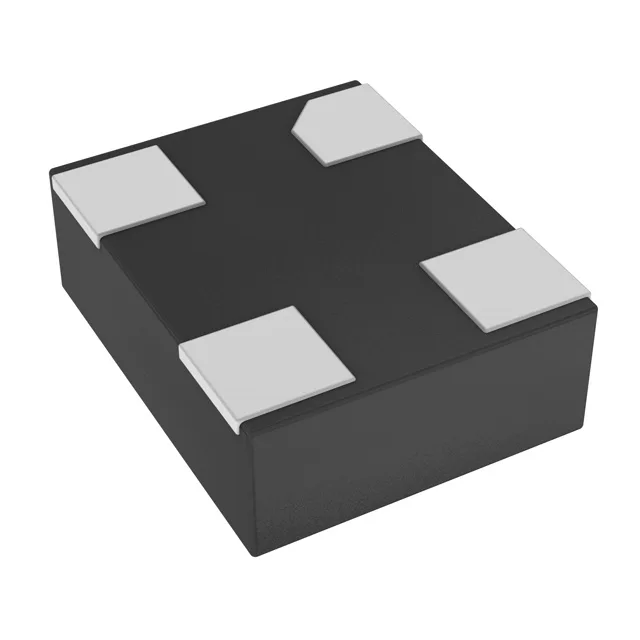
Microchip Technology DSC1001DE1-030.3779 — Crystals & Oscillators

DSC1001DE1-030.3779 – 30.3779 MHz MEMS XO, AEC-Q100, Active

MPNDSC1001DE1-030.3779
Active

Microchip Technology DSC1001DE1-030.3779, MEMS-based XO (Standard), 30.3779 MHz, CMOS output, ±50 ppm stability, AEC-Q100 rated, 1.8 V–3.3 V supply, 4-SMD package.

Sourced new & surplus through independent channelsAuthenticity-screened · ESD-safe packingListing updated Aug 2026

Specifications

DSC1001DE1-030.3779 specifications
ParameterValue
TypeXO (Standard)
SeriesDSC1001
MountingSurface Mount
Voltage1.8V ~ 3.3V
Current - supply7.2mA
Current - supply (Disable)15µA
Frequency30.3779 MHz
Frequency stability±50ppm
Operating temperature-20°C~70°C
Size (Dimension)0.098\" L x 0.079\" W (2.50mm x 2.00mm)
Height - seated0.035\" (0.90mm)
OutputCMOS
PackageTube
RatingsAEC-Q100
FunctionStandby (Power Down)
Base resonatorMEMS
Case4-SMD, No Lead

Product details

What the AEC-Q100 rating means for your BOM

The DSC1001DE1-030.3779 carries an AEC-Q100 rating — the automotive IC qualification standard. For any design targeting IATF 16949 compliance, this is the minimum gate the oscillator must clear.

The DSC1001 base product number covers a family of MEMS oscillators; the suffix DE1-030.3779 encodes the specific frequency, stability grade, and output type.

Why a MEMS resonator over quartz?

A MEMS oscillator has no crystal blank to fracture under shock or vibration — a known failure mode in automotive and industrial environments. The datasheet will show the shock and vibration ratings, which typically exceed quartz by a factor of 5–10×. For a board that sees 50 g shock or constant vibration from a motor or compressor, this is a reliability advantage. The supply voltage range of 1.8 V to 3.3 V means the same device can be used across a 3.3 V microcontroller I/O rail and a 1.8 V FPGA bank without a second oscillator variant — one line item covers both domains.

Frequently asked questions

Can the DSC1001DE1-030.3779 be used in automotive designs?

Yes, it carries an AEC-Q100 rating, which qualifies it for automotive applications. It is suitable for cabin or climate-controlled modules, not under-hood locations where ambient exceeds 70°C.