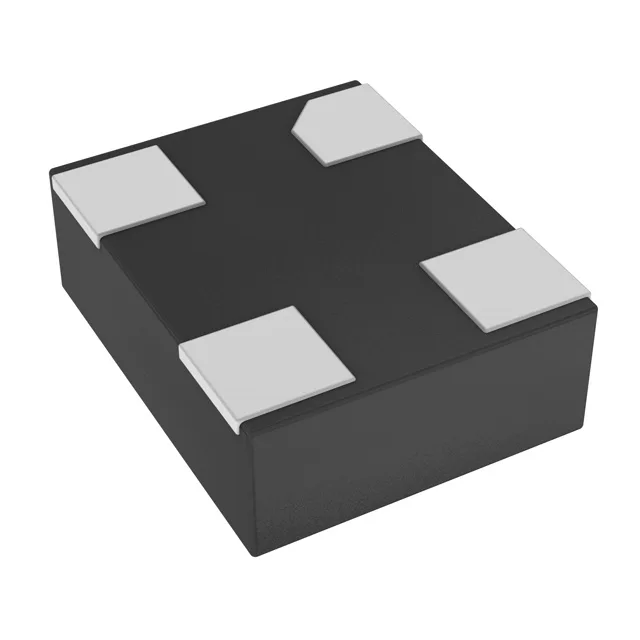
Microchip Technology DSC1001DE1-012.0000 — Crystals & Oscillators

DSC1001DE1-012.0000 MEMS Oscillator – Microchip, AEC-Q100

MPNDSC1001DE1-012.0000
Active

Microchip Technology DSC1001DE1-012.0000, XO (Standard) MEMS oscillator, 12 MHz CMOS output, AEC-Q100 qualified, 1.8V–3.3V supply, -20°C to 70°C, 4-SMD no-lead package.

$1.1400Ref. price · indicative, final on quote
Independent supplier — new & surplus stockAuthenticity-screened · ESD-safe packingListing updated Aug 2026

Specifications

DSC1001DE1-012.0000 specifications
ParameterValue
TypeXO (Standard)
SeriesDSC1001
MountingSurface Mount
Supply voltage1.8V ~ 3.3V
Current - supply6.3mA
Current - supply (Disable)15µA
Frequency12 MHz
Frequency stability±50ppm
Operating temperature-20°C~70°C
Size (Dimension)0.098\" L x 0.079\" W (2.50mm x 2.00mm)
Height - seated0.035\" (0.90mm)
OutputCMOS
PackageTube
RatingsAEC-Q100
FunctionStandby (Power Down)
Base resonatorMEMS
Case4-SMD, No Lead

Product details

Automotive-grade timing in a compact MEMS package

The DSC1001DE1-012.0000 is a MEMS-based XO (Standard) oscillator delivering a 12 MHz CMOS output with ±50 ppm frequency stability across -20°C to 70°C. The MEMS resonator eliminates the startup reliability concerns of a quartz crystal in cold-crank or high-vibration environments.

Supply voltage and power-down for battery-sensitive designs

Lifecycle and sourcing outlook

Availability confirmed at RFQ.

Frequently asked questions

Is the DSC1001DE1-012.0000 AEC-Q100 qualified?

Yes, the DSC1001DE1-012.0000 carries AEC-Q100 qualification, meaning it has passed automotive-grade reliability stress tests including temperature cycling, ESD, and latch-up. This qualifies it for under-hood and cabin electronics where extended temperature and vibration are expected.

Can the DSC1001DE1-012.0000 be replaced by another Microchip MEMS oscillator?

No direct pin-compatible replacement within the DSC1001 family is documented for this exact frequency and qualification. The DSC1001 series shares the same 4-SMD no-lead footprint, but frequency, stability grade, and temperature range must match the BOM. Confirm with the datasheet before substituting.