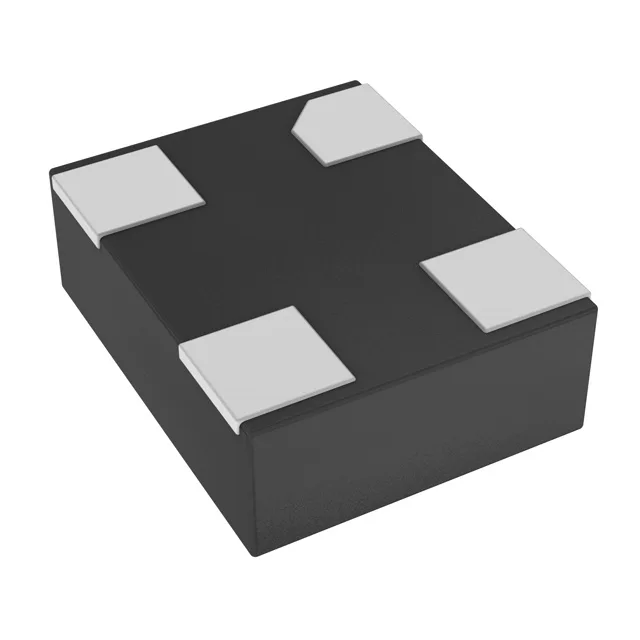
Microchip Technology DSC1001DC1-074.2500 — Crystals & Oscillators

DSC1001DC1-074.2500 MEMS XO – 74.25 MHz, AEC-Q100

MPNDSC1001DC1-074.2500
Active

Microchip Technology DSC1001DC1-074.2500, XO (Standard) MEMS oscillator, 74.25 MHz CMOS output, 1.8V~3.3V supply, AEC-Q100, 0°C~70°C, 4-SMD no-lead package.

Sourced new & surplus through independent channelsAuthenticity-screened · ESD-safe packingListing updated Aug 2026

Specifications

DSC1001DC1-074.2500 specifications
ParameterValue
TypeXO (Standard)
SeriesDSC1001
MountingSurface Mount
Voltage1.8V ~ 3.3V
Current - supply8.7mA
Current - supply (Disable)15µA
Frequency74.25 MHz
Frequency stability±50ppm
Operating temperature0°C~70°C
Size (Dimension)0.098\" L x 0.079\" W (2.50mm x 2.00mm)
Height - seated0.035\" (0.90mm)
OutputCMOS
PackageTube
RatingsAEC-Q100
FunctionStandby (Power Down)
Base resonatorMEMS
Case4-SMD, No Lead

Product details

The DSC1001DC1-074.2500 is a Microchip MEMS-based XO (Standard) delivering a 74.25 MHz CMOS output – a common pixel clock for 720p/1080i video or a reference for automotive infotainment serializers. The part is suited for cabin or infotainment systems where ambient stays below 70°C, not for under-hood or engine-bay placement. The standby function pulls the disable current down to 15 µA, useful for sleep-mode power budgets in battery-backed modules.

Maximum active current is 8.7 mA – at 74.25 MHz and 3.3 V, the dynamic current is about 7 mA typical; the 8.7 mA ceiling gives margin for the output load. In standby, the 15 µA disable current lets the oscillator sit on a shared power rail without draining a coin cell.

Package and board footprint

The 4-SMD no-lead package measures 2.50 mm × 2.00 mm with a seated height of 0.90 mm – a compact footprint that fits tight layout zones near a processor or serializer.

Frequently asked questions

Is DSC1001DC1-074.2500 AEC-Q100 qualified?

Yes, the DSC1001DC1-074.2500 carries an AEC-Q100 rating, meaning it has passed automotive-grade reliability stress tests including temperature cycling and ESD.