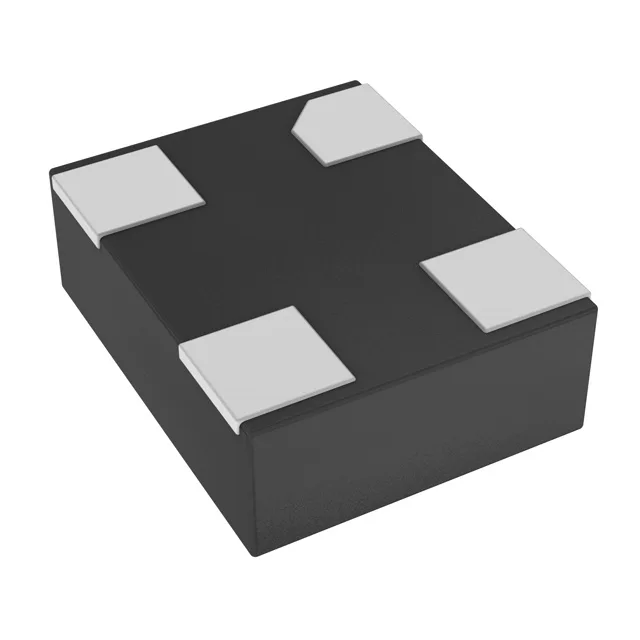
Microchip Technology DSC1001CL5-027.1200 — Crystals & Oscillators

DSC1001CL5-027.1200 MEMS Oscillator 27.12 MHz AEC-Q100

MPNDSC1001CL5-027.1200
Active

Microchip Technology DSC1001CL5-027.1200, XO (Standard) MEMS oscillator, 27.12 MHz CMOS output, ±10 ppm stability, AEC-Q100 qualified, -40°C to +105°C, 1.8V–3.3V supply, 4-SMD no-lead package.

Independent supplier — new & surplus stockAuthenticity-screened · ESD-safe packingListing updated Aug 2026

Specifications

DSC1001CL5-027.1200 specifications
ParameterValue
TypeXO (Standard)
SeriesDSC1001
MountingSurface Mount
Supply voltage1.8V ~ 3.3V
Current - supply7.2mA
Current - supply (Disable)15µA
Frequency27.12 MHz
Frequency stability±10ppm
Operating temperature-40°C~105°C
Size (Dimension)0.126\" L x 0.098\" W (3.20mm x 2.50mm)
Height - seated0.035\" (0.90mm)
OutputCMOS
PackageTube
RatingsAEC-Q100
FunctionStandby (Power Down)
Base resonatorMEMS
Case4-SMD, No Lead

Product details

Operating from 1.8V to 3.3V, the oscillator directly interfaces with 1.8V, 2.5V, and 3.3V logic families without an external level translator — a single BOM line covers multiple core voltages across a product family.

Housed in a 4-SMD, no-lead package measuring 3.20 mm x 2.50 mm with a seated height of 0.90 mm, the footprint matches industry-standard 3.2 x 2.5 mm ceramic and plastic oscillator packages — a drop-in replacement for quartz XOs of the same dimensions. Surface-mount mounting with no exposed leads reduces parasitic capacitance and simplifies reflow profiling; the package is compatible with standard Pb-free solder profiles.

Frequently asked questions

What is the frequency of DSC1001CL5-027.1200?

The oscillator outputs 27.12 MHz, a common reference frequency for USB 2.0 full-speed, Bluetooth baseband, and many wireless MCU clock trees.

Is DSC1001CL5-027.1200 AEC-Q100 qualified?

Yes, it is rated AEC-Q100, which means it has passed automotive-grade reliability testing including temperature cycling, ESD, and latch-up — suitable for under-hood and cabin electronics operating from -40°C to +105°C.

What is the difference between MEMS and quartz oscillators?

MEMS oscillators use a silicon micro-electromechanical resonator instead of a quartz crystal. They offer faster start-up, better shock and vibration tolerance, and typically wider operating temperature ranges. The DSC1001 series uses a MEMS resonator, which contributes to its ±10 ppm stability and AEC-Q100 qualification.

Are MEMS oscillators suitable for automotive?

Yes, when AEC-Q100 qualified. MEMS oscillators are inherently more resistant to shock and vibration than quartz, which is an advantage in automotive environments.