Its AEC-Q100 qualification means it meets automotive reliability stress and temperature-grade requirements — suitable for under-hood engine control units, ADAS sensor modules, and infotainment systems where a crystal oscillator's vibration sensitivity or startup margin might be a concern.
Operating from 1.8V to 3.3V, this oscillator spans the common digital core and I/O rails without needing a separate regulator — a single part works across a 3.3V CAN transceiver domain and a 1.8V MCU core. Active pull-up on the output during standby keeps the downstream logic input from floating.
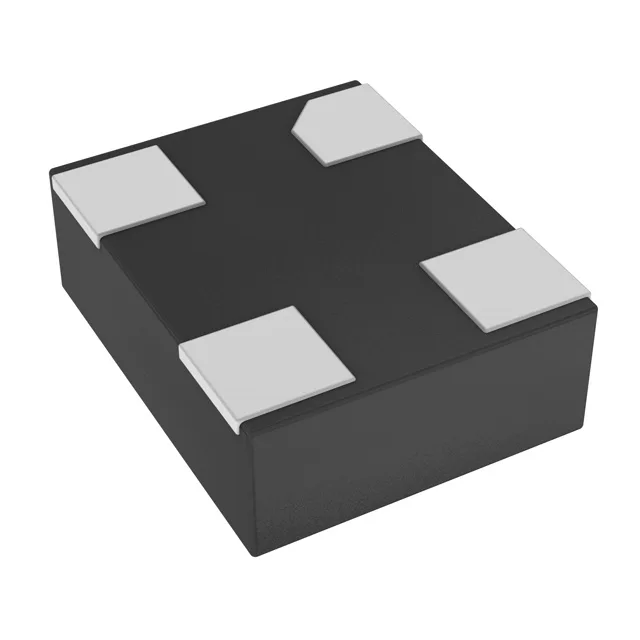
4-SMD, no-lead package — board layout note
Housed in a 4-SMD, no-lead package measuring 3.20 mm x 2.50 mm with a seated height of 0.90 mm. The package footprint matches many 4-pin crystal oscillators, simplifying a drop-in replacement on existing PCB layouts.