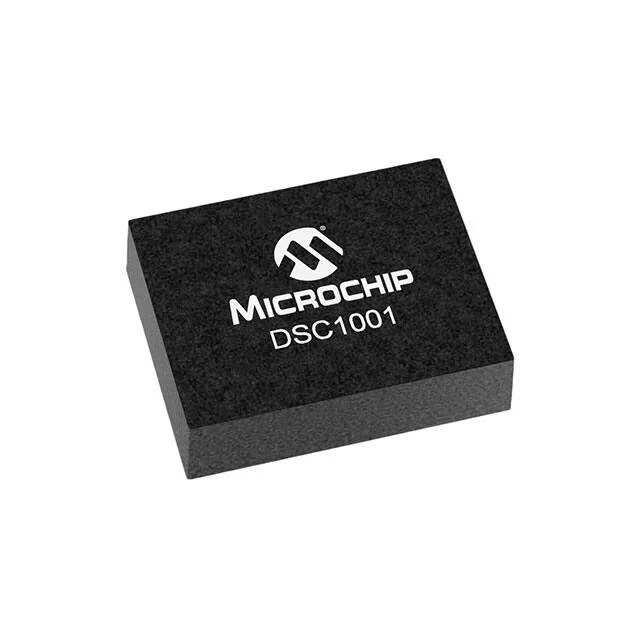
Microchip Technology DSC1001CL2-066.0000 — Crystals & Oscillators

DSC1001CL2-066.0000 MEMS XO 66 MHz CMOS ±25 ppm AEC-Q100

MPNDSC1001CL2-066.0000
Active

Microchip DSC1001CL2-066.0000, MEMS-based XO (Standard), 66 MHz CMOS output, ±25 ppm stability, AEC-Q100 qualified, 1.7V–3.6V supply, 4-VDFN package, -40°C to 105°C.

Independent supplier — new & surplus stockAuthenticity-screened · ESD-safe packingListing updated Aug 2026

Specifications

DSC1001CL2-066.0000 specifications
ParameterValue
TypeXO (Standard)
SeriesDSC1001
MountingSurface Mount
Supply voltage1.7V ~ 3.6V
Current - supply8mA
Current - supply (Disable)15µA
Frequency66 MHz
Frequency stability±25ppm
Operating temperature-40°C~105°C
Size (Dimension)0.126\" L x 0.098\" W (3.20mm x 2.50mm)
Height - seated0.035\" (0.90mm)
OutputCMOS
PackageTube
RatingsAEC-Q100
FunctionStandby (Power Down)
Base resonatorMEMS
Case4-VDFN

Product details

Supply voltage and interface compatibility

Operating from 1.7V to 3.6V, the oscillator covers 1.8V, 2.5V, and 3.3V logic rails without an external regulator — one BOM entry serves multiple core voltages. The CMOS output interfaces directly with most MCU clock inputs, FPGA clock pins, and Ethernet PHY reference oscillators; no level translation needed when the supply matches the receiving rail.

Package footprint and layout notes

Housed in a 4-VDFN package measuring 3.20 mm x 2.50 mm with a seated height of 0.90 mm, the part fits tight PCB stack-ups in automotive ECUs and portable instrumentation.

No last-time-buy window or successor part has been announced.

Frequently asked questions

What is the frequency stability of DSC1001CL2-066.0000?

The frequency stability is ±25 ppm over the operating temperature range and supply voltage variation.

Is DSC1001CL2-066.0000 compatible with a 1.8V supply?

Yes. The supply voltage range is 1.7V to 3.6V, so a 1.8V rail is within spec. The CMOS output swings rail-to-rail, matching the receiving logic level.

Is DSC1001CL2-066.0000 AEC-Q100 qualified?

Yes, it carries AEC-Q100 qualification, making it suitable for automotive applications where reliability testing per the standard is required.