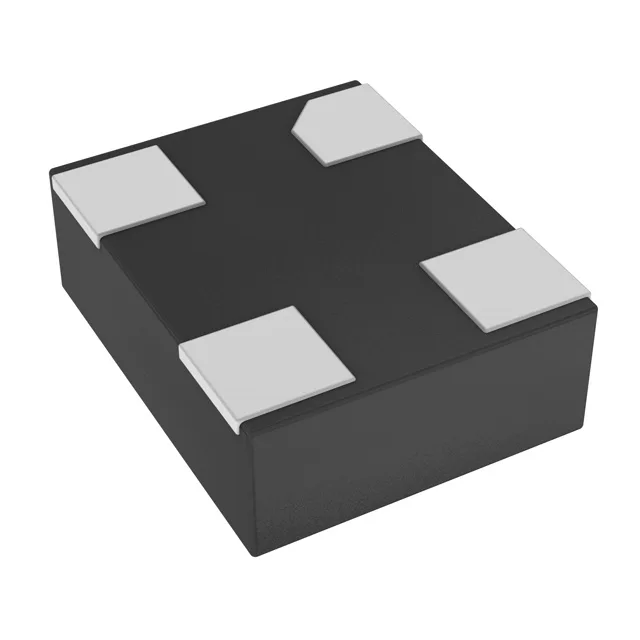
Microchip Technology DSC1001CL2-025.5760 — Crystals & Oscillators

DSC1001CL2-025.5760 MEMS XO – Microchip, 25.576 MHz, CMOS

MPNDSC1001CL2-025.5760
Active

Microchip Technology DSC1001CL2-025.5760, XO (Standard) MEMS oscillator, 25.576 MHz CMOS output, ±25 ppm stability, 1.8V–3.3V supply, -40°C to +105°C, AEC-Q100 qualified, 4-SMD no-lead package.

Independent supplier — new & surplus stockAuthenticity-screened · ESD-safe packingListing updated Aug 2026

Specifications

DSC1001CL2-025.5760 specifications
ParameterValue
TypeXO (Standard)
SeriesDSC1001
MountingSurface Mount
Supply voltage1.8V ~ 3.3V
Current - supply6.3mA
Current - supply (Disable)15µA
Frequency25.576 MHz
Frequency stability±25ppm
Operating temperature-40°C~105°C
Size (Dimension)0.126\" L x 0.098\" W (3.20mm x 2.50mm)
Height - seated0.035\" (0.90mm)
OutputCMOS
PackageTube
RatingsAEC-Q100
FunctionStandby (Power Down)
Base resonatorMEMS
Case4-SMD, No Lead

Product details

The DSC1001CL2-025.5760 is a MEMS-based XO (Standard) from Microchip's DSC1001 series, delivering a 25.576 MHz CMOS output with ±25 ppm frequency stability across -40°C to +105°C — the full AEC-Q100 Grade 1 temperature band.

Standby power-down and package footprint

The 4-SMD no-lead package (3.20 mm × 2.50 mm, 0.90 mm seated height) is a standard MEMS oscillator footprint, pin-compatible with many quartz XO footprints of the same size. Maximum active current is 6.3 mA, keeping the thermal load low in a dense SMD layout.

Active production status and sourcing

Frequently asked questions

Does DSC1001CL2-025.5760 have a standby function?

Yes, the function is Standby (Power Down). When enabled, the oscillator stops and the supply current drops to 15 µA max, allowing the downstream clock tree to be gated without an external load switch.

Can DSC1001CL2-025.5760 replace a quartz oscillator?

Yes, the MEMS resonator replaces the quartz crystal in a standard XO. The 4-SMD no-lead package (3.20 mm × 2.50 mm) is footprint-compatible with many quartz XOs of the same size, and the CMOS output is a drop-in replacement. The MEMS version eliminates crystal aging and offers better shock/vibration tolerance, though the phase-noise profile differs from a quartz oscillator — review the datasheet's phase-noise plot if your application is jitter-sensitive.