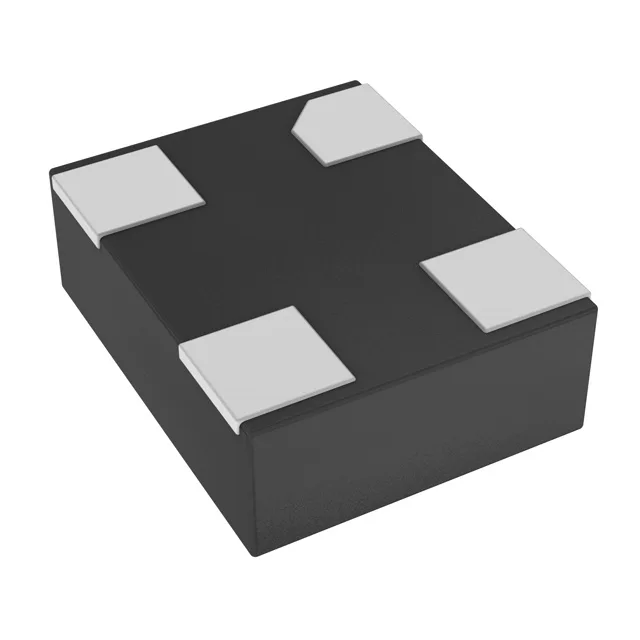
Microchip Technology DSC1001CL2-024.5760T — Crystals & Oscillators

DSC1001CL2-024.5760T MEMS Oscillator

MPNDSC1001CL2-024.5760T
Active

Microchip Technology DSC1001 series MEMS XO (Standard), 24.576 MHz, CMOS output, ±25 ppm frequency stability, 1.8V–3.3V supply, -40°C to 105°C, AEC-Q100 qualified, 4-SMD no-lead package, Tape & Reel.

Independent supplier — new & surplus stockAuthenticity-screened · ESD-safe packingListing updated Aug 2026

Specifications

DSC1001CL2-024.5760T specifications
ParameterValue
TypeXO (Standard)
SeriesDSC1001
MountingSurface Mount
Supply voltage1.8V ~ 3.3V
Current - supply6.3mA
Current - supply (Disable)15µA
Frequency24.576 MHz
Frequency stability±25ppm
Operating temperature-40°C~105°C
Size (Dimension)0.126\" L x 0.098\" W (3.20mm x 2.50mm)
Height - seated0.035\" (0.90mm)
OutputCMOS
PackageTape & Reel (TR)
RatingsAEC-Q100
FunctionStandby (Power Down)
Base resonatorMEMS
Case4-SMD, No Lead

Product details

MEMS resonator and CMOS output

A MEMS-based XO (Standard) at 24.576 MHz with CMOS output.

Automotive and industrial temperature range

This is the under-hood and engine-bay temperature band — an ECU or transmission controller that sees 105°C on a hot day still has margin. Also fits outdoor telecom cabinets and factory-floor automation where ambient heat is the norm.

Wide supply range and standby power-down

Housed in a 4-SMD, No Lead package measuring 3.20 mm x 2.50 mm with a seated height of 0.90 mm. The small footprint saves board space and the no-lead construction reduces parasitic inductance compared to a leaded package — helpful for keeping the clock edge clean at the receiver.

Frequently asked questions

What is the DSC1001CL2-024.5760T frequency?

24.576 MHz. This is a standard frequency for Ethernet PHY reference clocks, USB, and serial communication controllers.

What is the standby power down function on this oscillator?

The Standby (Power Down) function disables the output and reduces supply current to 15 µA max. Pulling the enable pin low puts the oscillator into a low-power sleep state, preserving battery life in systems that cycle between active and idle modes.

How does a MEMS oscillator compare to a quartz crystal oscillator?

MEMS oscillators use a silicon resonator instead of a quartz crystal. They typically offer better shock and vibration tolerance, faster start-up, and a smaller footprint. The trade-off is that quartz can achieve tighter initial accuracy and lower phase noise in some applications. For the DSC1001CL2-024.5760T, the ±25 ppm stability is adequate for most digital clocking needs.