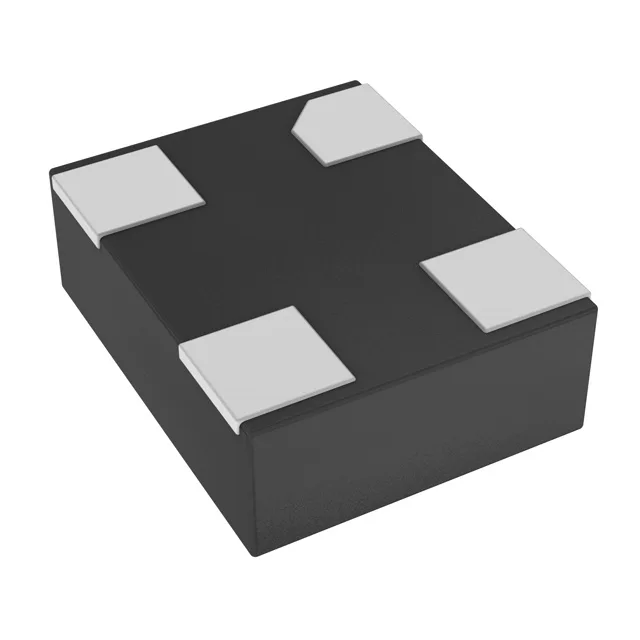
Microchip Technology DSC1001CL2-024.0000T — Crystals & Oscillators

DSC1001CL2-024.0000T MEMS Oscillator 24 MHz CMOS AEC-Q100 -

MPNDSC1001CL2-024.0000T
Active

Microchip DSC1001 series, XO (Standard) MEMS oscillator, 24.0000 MHz CMOS output, 1.8V to 3.3V supply, AEC-Q100 qualified, -40 to +105°C industrial temperature range, 4-SMD no-lead package.

$1.3350Ref. price · indicative, final on quote
Independent supplier — new & surplus stockAuthenticity-screened · ESD-safe packingListing updated Aug 2026

Specifications

DSC1001CL2-024.0000T specifications
ParameterValue
TypeXO (Standard)
SeriesDSC1001
MountingSurface Mount
Supply voltage1.8V ~ 3.3V
Current - supply6.3mA
Current - supply (Disable)15µA
Frequency24 MHz
Frequency stability±25ppm
Operating temperature-40°C~105°C
Size (Dimension)0.126\" L x 0.098\" W (3.20mm x 2.50mm)
Height - seated0.035\" (0.90mm)
OutputCMOS
PackageTape & Reel (TR)
RatingsAEC-Q100
FunctionStandby (Power Down)
Base resonatorMEMS
Case4-SMD, No Lead

Product details

The ±25 ppm frequency stability is tight enough for CAN, LIN, and basic Ethernet PHYs without external trimming.

Supply voltage range and standby power-down

MEMS resonator advantage vs quartz

Active lifecycle and sourcing through independent distribution

The 4-SMD, no-lead package measures 3.20 mm x 2.50 mm with a seated height of 0.90 mm — a compact footprint that fits space-constrained ECU and sensor module layouts.

Frequently asked questions

Where can I buy the DSC1001CL2-024.0000T and how is it quoted?

Submit an RFQ with your target quantity and target price; we confirm availability and current pricing at quote time. No stock-holding claim is made — each order is sourced against the BOM line.

Is the DSC1001CL2-024.0000T AEC-Q100 qualified?

Yes, it carries AEC-Q100 qualification. This means it meets the automotive-grade reliability stress and temperature requirements — the OEM auditor will accept PPAP documentation for this part.

What does the standby (Power Down) function do on this oscillator?

When the standby pin is asserted, the oscillator stops and draws 15 µA max from the supply. This allows the clock to be gated off during system sleep modes while keeping the oscillator ready for a fast wake-up — useful in battery-backed automotive modules.