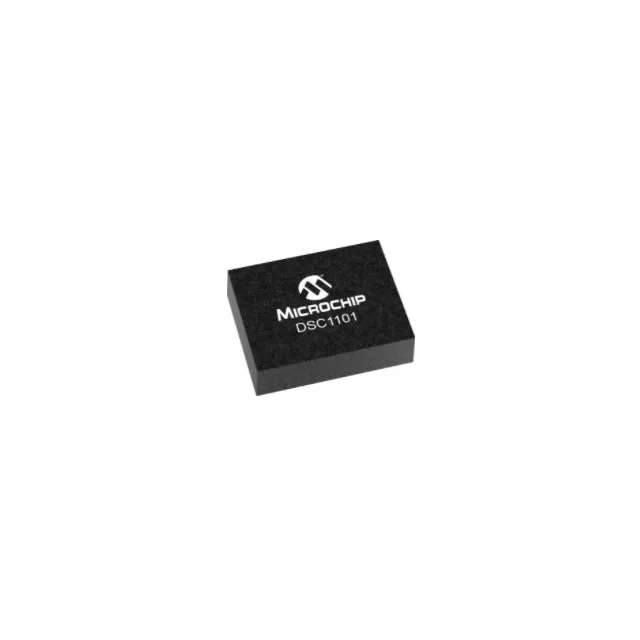
Microchip Technology DSC1001CL1-012.0000T — Crystals & Oscillators

DSC1001CL1-012.0000T MEMS XO – 12 MHz CMOS, AEC-Q100

MPNDSC1001CL1-012.0000T
Active

Microchip Technology DSC1001CL1-012.0000T, XO (Standard) MEMS oscillator, 12 MHz CMOS output, ±50 ppm stability, 1.8V–3.3V supply, AEC-Q100, -40°C to 105°C, 4-VDFN package, Tape & Reel.

Independent supplier — new & surplus stockAuthenticity-screened · ESD-safe packingListing updated Aug 2026

Specifications

DSC1001CL1-012.0000T specifications
ParameterValue
TypeXO (Standard)
SeriesDSC1001
MountingSurface Mount
Supply voltage1.8V ~ 3.3V
Current - supply8mA
Current - supply (Disable)15µA
Frequency12 MHz
Operating temperature-40°C~105°C
Size (Dimension)0.126\" L x 0.098\" W (3.20mm x 2.50mm)
Height - seated0.035\" (0.90mm)
OutputCMOS
PackageTape & Reel (TR)
RatingsAEC-Q100
FunctionStandby (Power Down)
Base resonatorMEMS
Case4-VDFN
Absolute pull range±50ppm

Product details

Automotive-grade MEMS clock source for harsh environments

The DSC1001CL1-012.0000T is a 12 MHz MEMS-based XO (Standard) oscillator from Microchip's DSC1001 series, delivering a CMOS output with ±50 ppm absolute pull range.

Supply flexibility and standby power savings

A single supply voltage from 1.8V to 3.3V lets this oscillator serve 1.8V MCU cores and 3.3V peripheral buses on the same BOM line.

Package and reflow considerations for the 4-VDFN

Housed in a 4-VDFN package measuring 3.20 mm x 2.50 mm with a seated height of 0.90 mm, this oscillator uses a standard surface-mount footprint. Check the MSL rating before reflow; the small 4-lead package is less prone to tombstoning than larger QFN parts, but pad geometry and solder-paste volume still matter for coplanarity.

Frequently asked questions

Is the DSC1001CL1-012.0000T AEC-Q100 qualified?

Yes, the DSC1001CL1-012.0000T carries AEC-Q100 ratings, meaning it has passed automotive-grade reliability stress tests including temperature cycling, ESD, and latch-up.

What does the standby function do on the DSC1001CL1-012.0000T?

The standby (power down) function disables the oscillator output and reduces supply current to 15 µA max. This is useful for battery-backed or sleep-mode circuits where the clock tree is gated off between wake cycles.