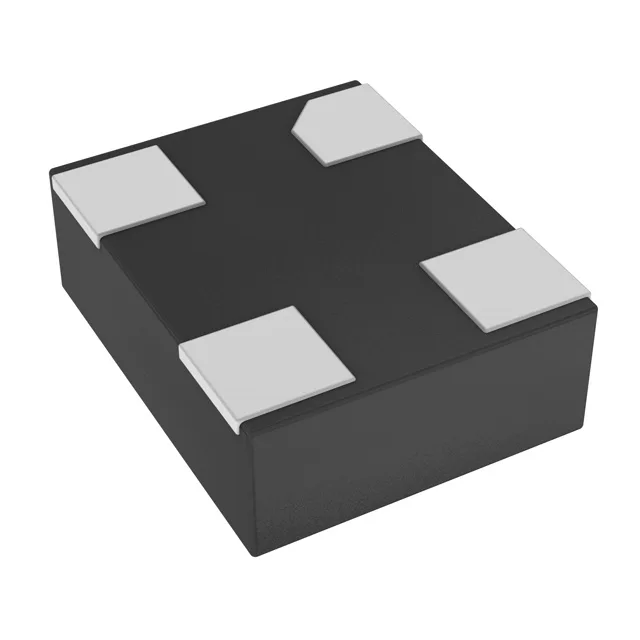
Microchip Technology DSC1001CI5-150.0000 — Crystals & Oscillators

DSC1001CI5-150.0000 MEMS XO – 150 MHz CMOS, AEC-Q100, Active

MPNDSC1001CI5-150.0000
Active

Microchip DSC1001CI5-150.0000, XO (Standard) MEMS oscillator, 150 MHz CMOS output, ±10 ppm stability, AEC-Q100, 4-SMD No Lead package, standby power-down function.

Sourced new & surplus through independent channelsAuthenticity-screened · ESD-safe packingListing updated Aug 2026

Specifications

DSC1001CI5-150.0000 specifications
ParameterValue
TypeXO (Standard)
SeriesDSC1001
MountingSurface Mount
Voltage1.8V ~ 3.3V
Current - supply12.2mA
Current - supply (Disable)15µA
Frequency150 MHz
Frequency stability±10ppm
Operating temperature-40°C~85°C
Size (Dimension)0.126\" L x 0.098\" W (3.20mm x 2.50mm)
Height - seated0.035\" (0.90mm)
OutputCMOS
PackageTube
RatingsAEC-Q100
FunctionStandby (Power Down)
Base resonatorMEMS
Case4-SMD, No Lead

Product details

Why a MEMS oscillator instead of quartz

This DSC1001CI5-150.0000 uses a MEMS resonator rather than a quartz crystal — the base resonator is silicon, not quartz, which means it survives higher shock and vibration levels without the frequency jump that can plague quartz oscillators in automotive or industrial environments.

150 MHz CMOS clock with standby control

Output is 150 MHz CMOS, which directly drives the clock input of most FPGAs, MCUs, and SoCs without needing an external level translator. The standby (power-down) function drops supply current to 15 µA when the enable pin is pulled low — useful for battery-backed systems that sleep between wake cycles.

Automotive-grade qualification and temperature range

That covers under-hood and cabin electronics where a standard commercial oscillator might drift or fail early.

Listed as Active product status from Microchip.

Frequently asked questions

How does DSC1001CI5-150.0000 compare to a quartz oscillator?

The MEMS resonator in this part is inherently more shock- and vibration-tolerant than a quartz crystal. Frequency stability is ±10 ppm, which is tighter than many standard quartz oscillators (±25 ppm typical). The standby power-down mode is also a feature not always available on quartz XOs.