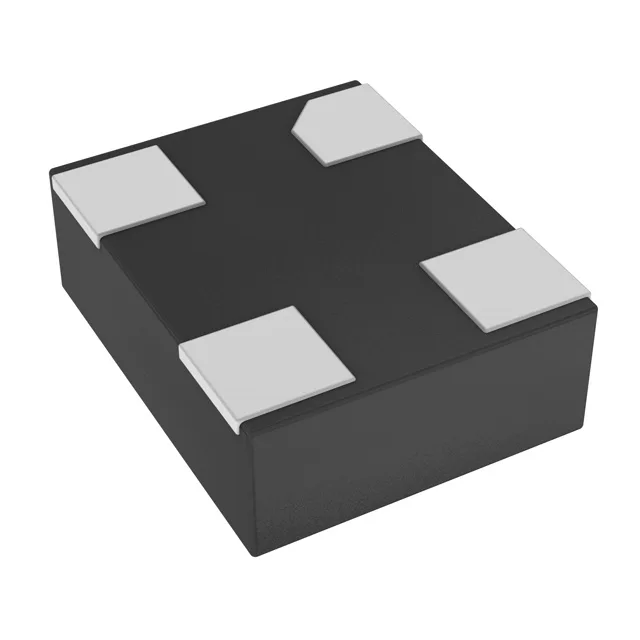
Microchip Technology DSC1001CI5-133.3330T — Crystals & Oscillators

DSC1001CI5-133.3330T MEMS Oscillator 133.333 MHz AEC-Q100

MPNDSC1001CI5-133.3330T
Active

Microchip DSC1001 series MEMS-based XO (Standard), 133.333 MHz, CMOS output, ±10 ppm stability, AEC-Q100 rated, 4-SMD no-lead package, 1.8V–3.3V supply.

Independent supplier — new & surplus stockAuthenticity-screened · ESD-safe packingListing updated Aug 2026

Specifications

DSC1001CI5-133.3330T specifications
ParameterValue
TypeXO (Standard)
SeriesDSC1001
MountingSurface Mount
Supply voltage1.8V ~ 3.3V
Current - supply8.7mA
Current - supply (Disable)15µA
Frequency133.333 MHz
Frequency stability±10ppm
Operating temperature-40°C~85°C
Size (Dimension)0.126\" L x 0.098\" W (3.20mm x 2.50mm)
Height - seated0.035\" (0.90mm)
OutputCMOS
PackageTape & Reel (TR)
RatingsAEC-Q100
FunctionStandby (Power Down)
Base resonatorMEMS
Case4-SMD, No Lead

Product details

Operates from a single 1.8V to 3.3V supply rail — the same BOM line can serve a 1.8V FPGA bank and a 3.3V PHY without a second oscillator variant.

Supplied on Tape & Reel (TR) in the standard 4-SMD, No Lead package (3.20mm x 2.50mm), compatible with automated pick-and-place and reflow assembly.

Frequently asked questions

What is the datasheet for DSC1001CI5-133.3330T?

Design engineers need full specifications to validate fit and performance in their circuit.

Where can I buy DSC1001CI5-133.3330T in stock?

Sourcing buyers need to quickly find available inventory to avoid production delays.

What is the price of DSC1001CI5-133.3330T in volume?

Buyers compare pricing across distributors to determine cost effectiveness for BOM.

Is DSC1001CI5-133.3330T a direct replacement for a standard quartz oscillator?

Engineers and techs need to ensure drop-in compatibility without PCB redesign.

Does DSC1001CI5-133.3330T support 1.8V supply operation?

Voltage compatibility is critical for low-power designs and mixed-voltage systems.

What is the lead time for DSC1001CI5-133.3330T from Microchip?

Lead time impacts production planning and risk of shortages for scheduled builds.