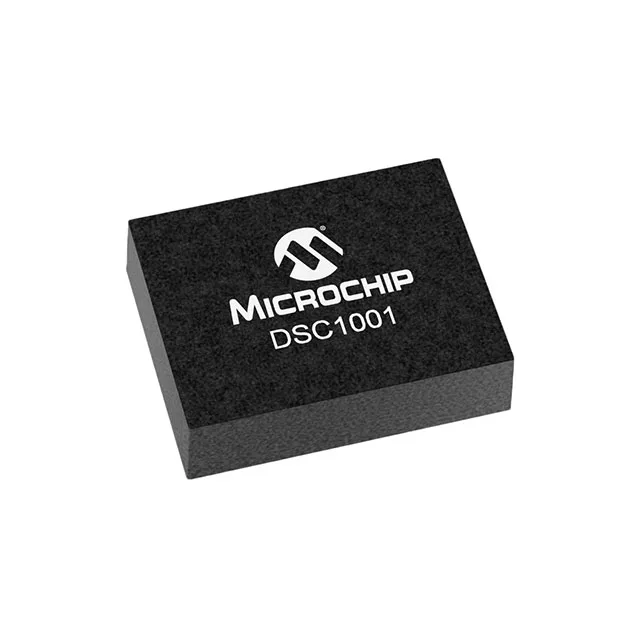
Microchip Technology DSC1001CI5-099.9990 — Crystals & Oscillators

DSC1001CI5-099.9990 MEMS XO – 99.999 MHz, AEC-Q100, CMOS

MPNDSC1001CI5-099.9990
Active

Microchip Technology DSC1001CI5-099.9990, MEMS-based XO (Standard), 99.999 MHz, CMOS output, ±10 ppm stability, AEC-Q100 qualified, 1.7V–3.6V supply, 4-VDFN package, standby (power down) function.

Sourced new & surplus through independent channelsAuthenticity-screened · ESD-safe packingListing updated Aug 2026

Specifications

DSC1001CI5-099.9990 specifications
ParameterValue
TypeXO (Standard)
SeriesDSC1001
MountingSurface Mount
Voltage1.7V ~ 3.6V
Current - supply10.5mA
Current - supply (Disable)15µA
Frequency99.999 MHz
Frequency stability±10ppm
Operating temperature-40°C ~ 85°C
Size (Dimension)0.126\" L x 0.098\" W (3.20mm x 2.50mm)
Height - seated0.035\" (0.90mm)
OutputCMOS
PackageTube
RatingsAEC-Q100
FunctionStandby (Power Down)
Base resonatorMEMS
Case4-VDFN

Product details

AEC-Q100 qualification places it in the automotive-grade band — suitable for engine-control ECU clock trees, ADAS sensor interfaces, and infotainment serial links where a quartz oscillator's shock sensitivity or lead time becomes a program risk. The 1.7V to 3.6V supply range lets it run directly from a 1.8V or 3.3V rail without an intermediate LDO, saving one regulator and its associated decoupling capacitors on the BOM.

Housed in a 4-VDFN package measuring 3.20 mm x 2.50 mm with a seated height of 0.90 mm, the DSC1001CI5-099.9990 occupies roughly the same PCB area as a 3225 quartz crystal but eliminates the need for external load capacitors.

The MEMS resonator construction typically carries shorter lead times than quartz equivalents because the die is fabricated on a standard CMOS line — no quartz crystal blank sourcing, no frequency trimming per batch.

Frequently asked questions

Is the DSC1001CI5-099.9990 AEC-Q100 qualified?

Yes, the DSC1001CI5-099.9990 carries AEC-Q100 qualification. This means it has passed the automotive-grade stress tests: high-temperature operating life, temperature cycling, ESD, and latch-up. It is suitable for under-hood and cabin electronics where the ambient temperature reaches 85°C and the supply rail may see transients.

What does the standby (power down) function do on this oscillator?

The standby function disables the output and places the internal circuitry into a low-power state. In standby, the maximum supply current drops to 15 µA, compared to 10.5 mA when active. This is useful for battery-powered or intermittently operated systems — the oscillator stops consuming power when the downstream processor is asleep, and the output returns to valid CMOS levels within the startup time specified in the datasheet.

What is the frequency stability of the DSC1001CI5-099.9990?

This tighter-than-typical stability (±25 ppm is common for standard XOs) means the oscillator meets the timing jitter budget for 100BASE-T1 Ethernet, USB 2.0, and precision sensor sampling without additional clock conditioning.