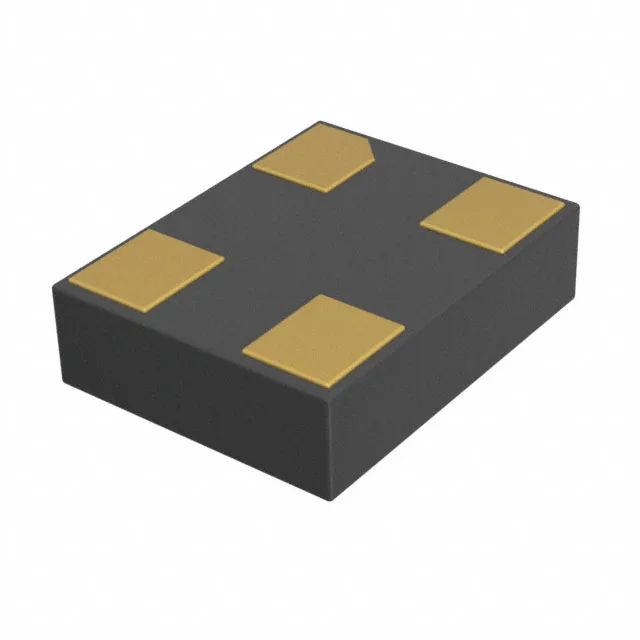
Microchip Technology DSC1001CI5-075.0000 — Crystals & Oscillators

DSC1001CI5-075.0000 MEMS XO – 75 MHz, ±10 ppm, AEC-Q100

MPNDSC1001CI5-075.0000
Active

Microchip DSC1001CI5-075.0000, XO (Standard), 75 MHz, CMOS output, ±10 ppm stability, AEC-Q100, -40°C to +85°C, 4-VDFN package

Independent supplier — new & surplus stockAuthenticity-screened · ESD-safe packingListing updated Aug 2026

Specifications

DSC1001CI5-075.0000 specifications
ParameterValue
TypeXO (Standard)
SeriesDSC1001
MountingSurface Mount
Supply voltage1.7V ~ 3.6V
Current - supply16.6mA
Current - supply (Disable)15µA
Frequency75 MHz
Frequency stability±10ppm
Operating temperature-40°C ~ 85°C
Size (Dimension)0.126\" L x 0.098\" W (3.20mm x 2.50mm)
Height - seated0.035\" (0.90mm)
OutputCMOS
PackageTube
RatingsAEC-Q100
FunctionStandby (Power Down)
Base resonatorMEMS
Case4-VDFN

Product details

AEC-Q100 qualification places this oscillator in the automotive-grade bin — suitable for engine control, ADAS, and infotainment clock trees where quartz-based parts may fail under shock or cold-crank voltage dips.

Supply range, standby, and package fit

Operates from 1.7 V to 3.6 V — a single rail covers 1.8 V, 2.5 V, and 3.3 V logic families without an external LDO, simplifying the power tree. Housed in a 4-VDFN package measuring 3.20 mm x 2.50 mm with a seated height of 0.90 mm — the 0.50 mm pitch lands on a standard 4-layer board without via-in-pad; the small footprint frees space near the SoC or PHY.

The DSC1001 series remains Microchip's mainstream MEMS oscillator family, so supply continuity for existing designs is stable.

Frequently asked questions

What is the frequency stability of DSC1001CI5-075.0000?

For a 75 MHz carrier, ±10 ppm translates to ±750 Hz maximum deviation — tight enough for most Ethernet and USB clock domains without external trimming.

Is DSC1001CI5-075.0000 AEC-Q100 qualified?

Yes, it carries AEC-Q100 qualification. This means it passed the automotive-grade stress tests: temperature cycling, ESD, latch-up, and extended high-temperature operating life. It is suitable for under-hood and cabin applications with ambient temperatures up to 85°C.

What is the difference between DSC1001 and DSC1002 series?

The DSC1001 series (this part) is a standard XO with ±10 ppm to ±50 ppm stability options. The DSC1002 series adds a spread-spectrum modulation feature to reduce EMI peak emissions — the trade-off is slightly higher jitter. Both share the same pinout, package, and supply range, so a board designed for DSC1001 can accept DSC1002 as a drop-in if EMI compliance becomes a concern.