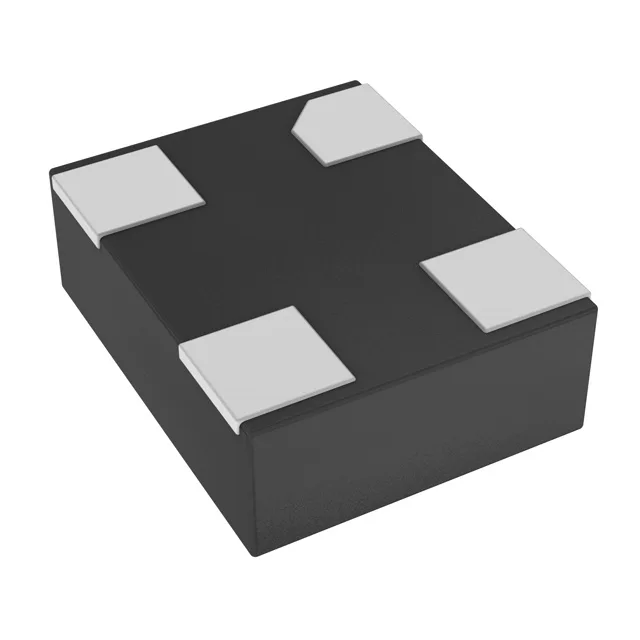
Microchip Technology DSC1001CI5-029.4912T — Crystals & Oscillators

DSC1001CI5-029.4912T Microchip MEMS XO 29.4912 MHz CMOS

MPNDSC1001CI5-029.4912T
Active

Microchip Technology DSC1001CI5-029.4912T, XO (Standard) MEMS oscillator, 29.4912 MHz CMOS output, ±10 ppm stability, 1.8V–3.3V supply, AEC-Q100 qualified, 4-SMD package.

Independent supplier — new & surplus stockAuthenticity-screened · ESD-safe packingListing updated Aug 2026

Specifications

DSC1001CI5-029.4912T specifications
ParameterValue
TypeXO (Standard)
SeriesDSC1001
MountingSurface Mount
Supply voltage1.8V ~ 3.3V
Current - supply7.2mA
Current - supply (Disable)15µA
Frequency29.4912 MHz
Frequency stability±10ppm
Operating temperature-40°C~85°C
Size (Dimension)0.126\" L x 0.098\" W (3.20mm x 2.50mm)
Height - seated0.035\" (0.90mm)
OutputCMOS
PackageTape & Reel (TR)
RatingsAEC-Q100
FunctionStandby (Power Down)
Base resonatorMEMS
Case4-SMD, No Lead

Product details

The 1.8V to 3.3V supply range lets a single BOM line serve both 1.8V-core and 3.3V-I/O domains without a separate level translator, reducing passive count and board area.

Standby function and low-power sleep mode

When enabled, the oscillator draws 7.2 mA max, typical for a MEMS XO at this frequency — the standby savings are 480×, so the part is well-suited to automotive body controllers and IoT edge nodes that cycle between active and deep-sleep states.

Housed in a 4-SMD, No Lead package measuring 3.20 mm × 2.50 mm with a seated height of 0.90 mm — the 0.126" × 0.098" footprint matches the industry-standard 3.2×2.5 mm oscillator land pattern, so no pad redesign is needed if replacing a quartz XO of the same size.

Frequently asked questions

What is the output type and frequency of DSC1001CI5-029.4912T?

CMOS output at 29.4912 MHz. The CMOS rail-to-rail swing is compatible with standard digital logic inputs — no external termination or level shifting is needed for 1.8V, 2.5V, or 3.3V logic families.

Is DSC1001CI5-029.4912T AEC-Q100 qualified and RoHS compliant?

Yes, it carries AEC-Q100 qualification, meaning it meets automotive-grade reliability testing (temperature cycling, ESD, latch-up). RoHS compliance is standard for Microchip's DSC1001 series; no exemption flags are listed in the product documentation.

How does the standby pin function?

The standby (power-down) pin disables the output and reduces supply current to 15 µA max. When the pin is asserted low (or open, depending on the configuration), the oscillator stops and the output goes high-impedance — useful for gating the clock in sleep modes without a separate enable switch.