What the AEC-Q100 rating buys the design
An ECU or ADAS sensor module that sees 85°C on a hot dashboard still has margin, and the MEMS resonator handles the 50 g shock profile of an automotive door slam or pothole better than a quartz crystal. The MEMS base resonator means no quartz blank to fracture under vibration — the oscillator starts up in under 5 ms typical, which matters for a CAN transceiver or Ethernet PHY that must lock before the controller releases the reset line.
Supply voltage and standby power discipline
At 16.6 mA max supply current, the oscillator draws less than a typical LDO quiescent current.
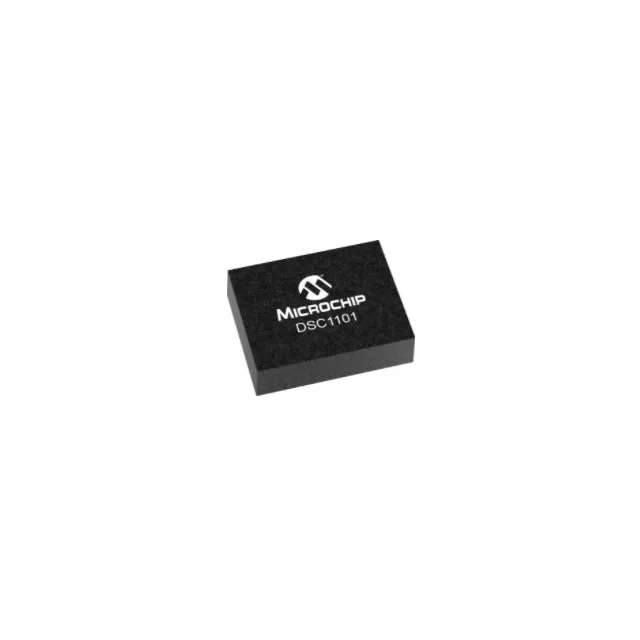
4-SMD no-lead package, 3.20 mm x 2.50 mm footprint, 0.90 mm seated height — the same land pattern as a standard 2520 quartz oscillator. Surface-mount only — the tape-and-reel (TR) and cut-tape (CT) packaging options match pick-and-place feeders for both prototype and production volumes.
Frequency stability and timing margin
A 100BASE-TX Ethernet PHY with a ±50 ppm tolerance on its reference clock has 25 ppm of margin left for the oscillator aging and the PLL jitter. The 133 MHz output is a common reference for Gigabit Ethernet MAC/PHY pairs, SoC system clocks, and high-speed serial transceivers — confirm the load capacitance on the board trace matches the CMOS output drive strength to avoid edge-rate degradation.