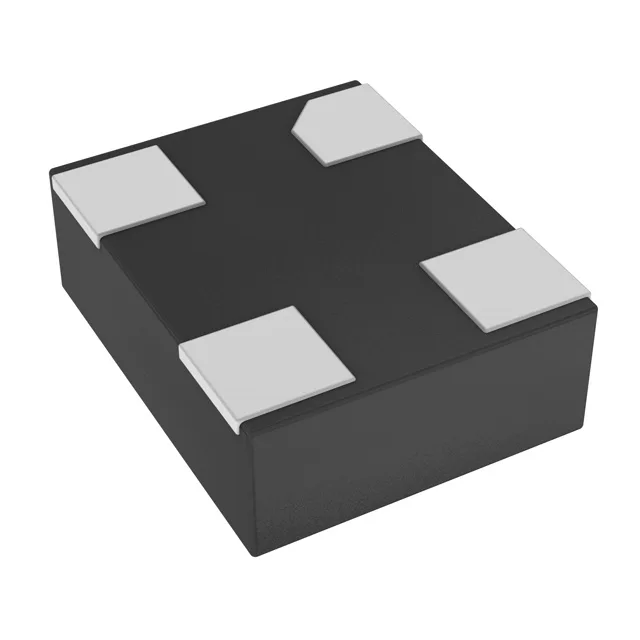
Microchip Technology DSC1001CI2-049.1520T — Crystals & Oscillators

DSC1001CI2-049.1520T XO 49.152 MHz CMOS MEMS Oscillator

MPNDSC1001CI2-049.1520T
Active

Microchip Technology DSC1001 series, XO (Standard) MEMS oscillator, 49.152 MHz, CMOS output, ±25ppm frequency stability, 1.8V ~ 3.3V supply, -40°C ~ 85°C, AEC-Q100 rated, 4-SMD no-lead package.

$1.2450Ref. price · indicative, final on quote
Sourced new & surplus through independent channelsAuthenticity-screened · ESD-safe packingListing updated Aug 2026

Specifications

DSC1001CI2-049.1520T specifications
ParameterValue
TypeXO (Standard)
SeriesDSC1001
MountingSurface Mount
Voltage1.8V ~ 3.3V
Current - supply7.2mA
Current - supply (Disable)15µA
Frequency49.152 MHz
Frequency stability±25ppm
Operating temperature-40°C~85°C
Size (Dimension)0.126\" L x 0.098\" W (3.20mm x 2.50mm)
Height - seated0.035\" (0.90mm)
OutputCMOS
PackageTape & Reel (TR)
RatingsAEC-Q100
FunctionStandby (Power Down)
Base resonatorMEMS
Case4-SMD, No Lead

Product details

49.152 MHz MEMS XO with CMOS output and standby

The DSC1001CI2-049.1520T is a Microchip MEMS-based XO (Standard) oscillator delivering a 49.152 MHz CMOS clock from a 1.8V to 3.3V supply rail — the wide input tolerance means the same part works across a 3.3V I/O bank or a 1.8V core domain without a separate level translator.

AEC-Q100 qualification and MEMS reliability

Package footprint and supply current

Housed in a 3.20 mm x 2.50 mm 4-SMD no-lead package (0.90 mm seated height), the footprint matches industry-standard 3.2 x 2.5 mm oscillator pads — a direct drop-in for quartz XO replacements on existing layouts. Maximum supply current is 7.2 mA during active oscillation, and the disable current is 15 µA — the 480:1 ratio between run and standby current makes the standby pin a real power-save feature, not a datasheet footnote.

Frequently asked questions

Is the DSC1001CI2-049.1520T compatible with both 1.8V and 3.3V supplies?

Yes. The supply voltage range is 1.8V to 3.3V, so the same oscillator works on a 1.8V core rail or a 3.3V I/O rail without a separate voltage translator. The CMOS output swings rail-to-rail, matching the logic family of the downstream IC.

What is the standby (power-down) behavior of this oscillator?

When the standby pin is asserted, the oscillator stops and the supply current drops to 15 µA max. The output goes high-impedance, which lets the downstream clock input float or be pulled low by an external resistor. This is useful for sleep-mode circuits where the clock must be disabled to save power.

Can I use the DSC1001CI2-049.1520T in an automotive design?

Yes. It carries an AEC-Q100 rating, which means it has passed automotive-grade reliability tests including temperature cycling, ESD, and latch-up.

What is the frequency stability of this oscillator?

Frequency stability is ±25ppm over the full operating temperature range. This is tight enough for most CAN, LIN, and Ethernet clocking without external trimming. For applications requiring better than ±25ppm, a different stability grade in the DSC1001 family would be needed.