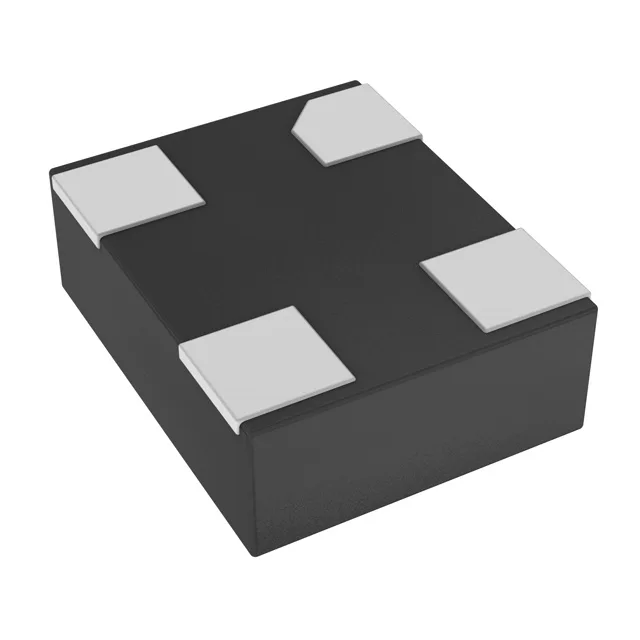
Microchip Technology DSC1001CI2-038.4000 — Crystals & Oscillators

DSC1001CI2-038.4000 Microchip MEMS Oscillator 38.4 MHz CMOS

MPNDSC1001CI2-038.4000
Active

Microchip Technology DSC1001CI2-038.4000, XO (Standard) MEMS oscillator, 38.4 MHz CMOS output, ±25 ppm stability, AEC-Q100 qualified, 4-SMD no-lead package

Independent supplier — new & surplus stockAuthenticity-screened · ESD-safe packingListing updated Aug 2026

Specifications

DSC1001CI2-038.4000 specifications
ParameterValue
TypeXO (Standard)
SeriesDSC1001
MountingSurface Mount
Supply voltage1.8V ~ 3.3V
Current - supply7.2mA
Current - supply (Disable)15µA
Frequency38.4 MHz
Frequency stability±25ppm
Operating temperature-40°C~85°C
Size (Dimension)0.126\" L x 0.098\" W (3.20mm x 2.50mm)
Height - seated0.035\" (0.90mm)
OutputCMOS
PackageTube
RatingsAEC-Q100
FunctionStandby (Power Down)
Base resonatorMEMS
Case4-SMD, No Lead

Product details

The DSC1001CI2-038.4000 is a 38.4 MHz XO (Standard) oscillator from Microchip's DSC1001 series, built on a MEMS resonator rather than a quartz crystal. The CMOS output delivers a rail-to-rail square wave that drives most digital clock inputs directly — no external termination or level translation needed for 1.8 V to 3.3 V logic families.

The Standby (Power Down) function drops the supply current to 15 µA max when the enable pin is de-asserted — useful for battery-backed RTC or CAN wake-up circuits where the oscillator must stop drawing its full 7.2 mA during sleep. The 7.2 mA max supply current at 38.4 MHz is typical for a MEMS oscillator at this frequency; the CMOS output swing is the main power draw, not the resonator itself.

Frequently asked questions

Is the DSC1001CI2-038.4000 AEC-Q100 qualified?

Yes, the DSC1001CI2-038.4000 carries an AEC-Q100 rating. This qualifies it for automotive applications including under-hood and chassis domains, with the reliability stress testing that implies.

What is the standby power-down feature on the DSC1001CI2-038.4000?

The Standby (Power Down) function disables the output and reduces supply current to 15 µA max, compared to 7.2 mA max during normal operation. It is controlled via the enable pin and is intended for battery-powered or intermittent-duty designs where the clock can be stopped during sleep.