AEC-Q100 qualification and a 1.8V to 3.3V supply range make it suitable for automotive ECUs, ADAS modules, and industrial controllers where a single oscillator must work across multiple voltage domains.
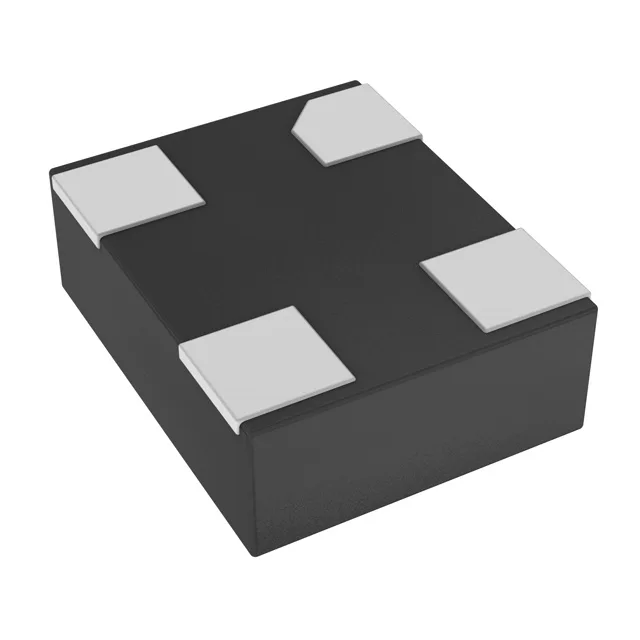
DSC1001CI2-037.1250T MEMS XO – 37.125 MHz, CMOS, AEC-Q100
MPNDSC1001CI2-037.1250T
Active
Microchip Technology DSC1001CI2-037.1250T, XO (Standard) MEMS oscillator, 37.125 MHz CMOS output, ±25 ppm stability, 1.8V–3.3V supply, -40°C to 85°C, AEC-Q100, 4-SMD no-lead package.
$1.4850Ref. price · indicative, final on quote
Independent supplier — new & surplus stockAuthenticity-screened · ESD-safe packingListing updated Aug 2026
Specifications
| Parameter | Value |
|---|---|
| Type | XO (Standard) |
| Series | DSC1001 |
| Mounting | Surface Mount |
| Supply voltage | 1.8V ~ 3.3V |
| Current - supply | 7.2mA |
| Current - supply (Disable) | 15µA |
| Frequency | 37.125 MHz |
| Frequency stability | ±25ppm |
| Operating temperature | -40°C~85°C |
| Size (Dimension) | 0.126\" L x 0.098\" W (3.20mm x 2.50mm) |
| Height - seated | 0.035\" (0.90mm) |
| Output | CMOS |
| Package | Tape & Reel (TR) |
| Ratings | AEC-Q100 |
| Function | Standby (Power Down) |
| Base resonator | MEMS |
| Case | 4-SMD, No Lead |
Product details
Frequently asked questions
Is the DSC1001CI2-037.1250T qualified for automotive use?
Yes, it carries AEC-Q100 rating, meeting the reliability and temperature requirements for automotive applications such as engine control or infotainment modules.
Can the DSC1001CI2-037.1250T replace the DSC1001CI2-037.1250?
The base product number is DSC1001; the suffix 'T' indicates tape-and-reel packaging. The bare DSC1001CI2-037.1250 without 'T' is the same oscillator in a different packaging format – electrically identical. Confirm your BOM's packaging requirement before substituting.
Is the DSC1001CI2-037.1250T compatible with 3.3V logic?
Yes. The supply voltage range is 1.8V to 3.3V, and the CMOS output is rail-to-rail, so it interfaces directly with 3.3V logic families without level translation.
What is the difference between MEMS and quartz oscillators?
MEMS oscillators like the DSC1001 use a silicon micro-electromechanical resonator instead of a quartz crystal. They offer smaller footprint, higher shock/vibration tolerance, and faster startup, while quartz typically provides lower phase noise. For this part, the MEMS approach enables the 4-SMD no-lead package and the wide supply range.