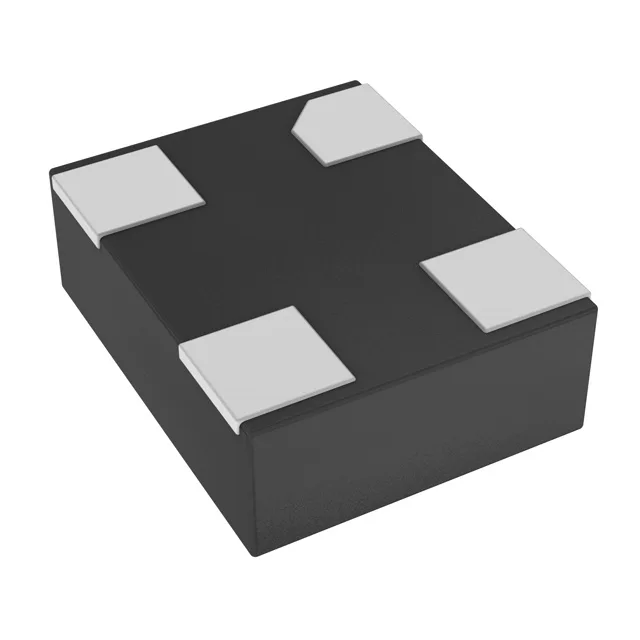
Microchip Technology DSC1001CI2-020.0000 — Crystals & Oscillators

DSC1001CI2-020.0000 – 20 MHz MEMS XO, CMOS, AEC-Q100, Active

MPNDSC1001CI2-020.0000
Active

Microchip DSC1001CI2-020.0000, MEMS-based XO (Standard), 20 MHz, CMOS output, AEC-Q100 qualified, 1.8V–3.3V supply, -40°C to 85°C, 4-SMD no-lead package.

$0.9600Ref. price · indicative, final on quote
Independent supplier — new & surplus stockAuthenticity-screened · ESD-safe packingListing updated Aug 2026

Specifications

DSC1001CI2-020.0000 specifications
ParameterValue
TypeXO (Standard)
SeriesDSC1001
MountingSurface Mount
Supply voltage1.8V ~ 3.3V
Current - supply6.3mA
Current - supply (Disable)15µA
Frequency20 MHz
Frequency stability±25ppm
Operating temperature-40°C~85°C
Size (Dimension)0.126\" L x 0.098\" W (3.20mm x 2.50mm)
Height - seated0.035\" (0.90mm)
OutputCMOS
PackageTube
RatingsAEC-Q100
FunctionStandby (Power Down)
Base resonatorMEMS
Case4-SMD, No Lead

Product details

The DSC1001CI2-020.0000 is a 20 MHz fixed-frequency XO (Standard) from Microchip's DSC1001 series, built on a MEMS resonator and delivering CMOS output.

The 1.8V to 3.3V supply range means the same oscillator can run off a 1.8V core rail or a 3.3V I/O bank — no level translator needed. Active current draw is 6.3 mA max, which keeps the thermal budget tight even in a sealed 4-SMD package.

Frequently asked questions

What is the exact frequency and output type of DSC1001CI2-020.0000?

It is a 20 MHz XO (Standard) with CMOS output. The CMOS rail-to-rail swing is compatible with most MCU and FPGA clock inputs without external level shifting.

Can DSC1001CI2-020.0000 be used in automotive applications?

Yes. The MEMS resonator is inherently more shock- and vibration-tolerant than quartz, which is an advantage in automotive environments.

What is the function of the standby (power down) pin?

The Standby (Power Down) function disables the oscillator output and puts the device into a low-power state drawing 15 µA max. Pulling the pin high returns the output to the 20 MHz clock within the startup time — no external gating logic required.