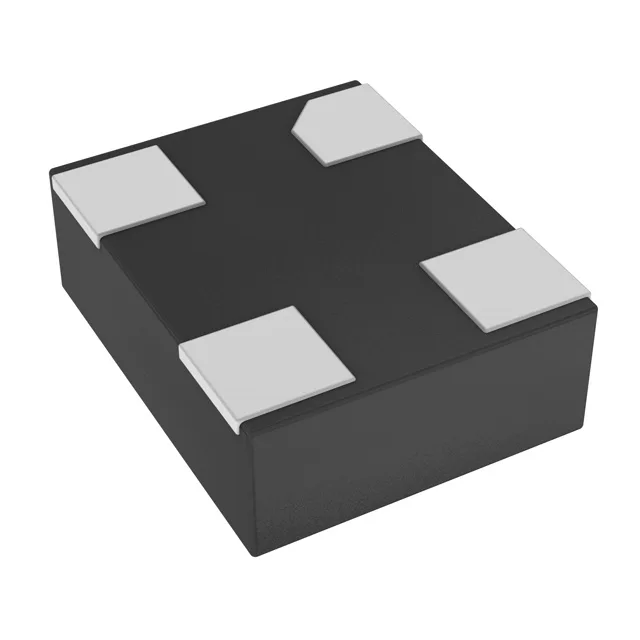
Microchip Technology DSC1001CI2-014.7456T — Crystals & Oscillators

DSC1001CI2-014.7456T – 14.7456 MHz MEMS XO, CMOS, AEC-Q100

MPNDSC1001CI2-014.7456T
Active

Microchip DSC1001CI2-014.7456T, XO (Standard) MEMS oscillator, 14.7456 MHz, CMOS output, ±25 ppm stability, AEC-Q100, -40°C to 85°C, 1.8V–3.3V supply, 4-SMD package.

$0.9600Ref. price · indicative, final on quote
Independent supplier — new & surplus stockAuthenticity-screened · ESD-safe packingListing updated Aug 2026

Specifications

DSC1001CI2-014.7456T specifications
ParameterValue
TypeXO (Standard)
SeriesDSC1001
MountingSurface Mount
Supply voltage1.8V ~ 3.3V
Current - supply6.3mA
Current - supply (Disable)15µA
Frequency14.7456 MHz
Frequency stability±25ppm
Operating temperature-40°C~85°C
Size (Dimension)0.126\" L x 0.098\" W (3.20mm x 2.50mm)
Height - seated0.035\" (0.90mm)
OutputCMOS
PackageTape & Reel (TR)
RatingsAEC-Q100
FunctionStandby (Power Down)
Base resonatorMEMS
Case4-SMD, No Lead

Product details

AEC-Q100 qualified, this oscillator is suited for automotive environments where the 14.7456 MHz clock feeds CAN, LIN, or Ethernet PHY reference inputs without needing an external crystal and load caps. The supply voltage spans 1.8V to 3.3V, so the same part number works on 1.8V, 2.5V, or 3.3V rails — one BOM line covers multiple designs.

Package, footprint, and power-down function

Housed in a 4-SMD, no-lead package measuring 3.20 mm x 2.50 mm with a seated height of 0.90 mm — a standard MEMS oscillator footprint that fits most 4-pin XO layouts without board changes. Maximum operating current is 6.3 mA at 14.7456 MHz — the CMOS output drives the load directly without an external buffer for typical fan-out of one to two receivers.

Frequently asked questions

Can I use DSC1001CI2-014.7456T as a direct replacement for a standard 14.7456 MHz crystal?

No — this is a MEMS oscillator with a CMOS output, not a quartz crystal. It replaces a crystal plus two load capacitors and an inverter/buffer stage, but the PCB must be laid out for an active oscillator footprint (4-SMD, no lead) rather than a two-terminal crystal.