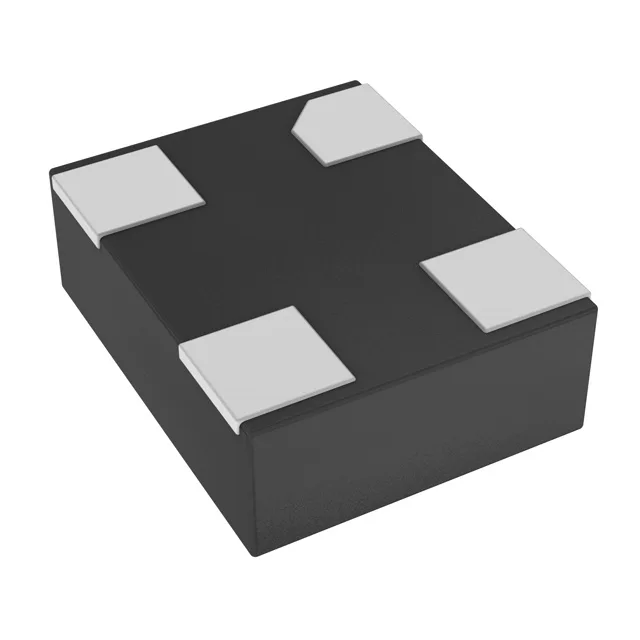
Microchip Technology DSC1001CI2-010.4857 — Crystals & Oscillators

DSC1001CI2-010.4857 MEMS XO 10.4857 MHz CMOS AEC-Q100

MPNDSC1001CI2-010.4857
Active

Microchip DSC1001CI2-010.4857, MEMS-based XO (Standard), 10.4857 MHz CMOS output, ±25ppm stability, 1.8V~3.3V supply, -40°C~85°C, AEC-Q100, 4-SMD no-lead package.

$1.1700Ref. price · indicative, final on quote
Independent supplier — new & surplus stockAuthenticity-screened · ESD-safe packingListing updated Aug 2026

Specifications

DSC1001CI2-010.4857 specifications
ParameterValue
TypeXO (Standard)
SeriesDSC1001
MountingSurface Mount
Supply voltage1.8V ~ 3.3V
Current - supply6.3mA
Current - supply (Disable)15µA
Frequency10.4857 MHz
Frequency stability±25ppm
Operating temperature-40°C~85°C
Size (Dimension)0.126\" L x 0.098\" W (3.20mm x 2.50mm)
Height - seated0.035\" (0.90mm)
OutputCMOS
PackageTube
RatingsAEC-Q100
FunctionStandby (Power Down)
Base resonatorMEMS
Case4-SMD, No Lead

Product details

The DSC1001CI2-010.4857 is a MEMS-based XO (Standard) from Microchip's DSC1001 series, delivering a fixed 10.4857 MHz CMOS output with ±25ppm frequency stability across -40°C to 85°C. Rated AEC-Q100, it suits automotive ECU reference clocks for CAN, LIN, or Ethernet PHY where quartz's shock and vibration sensitivity is a concern.

Supply and power-down flexibility

Operates from 1.8V to 3.3V supply, covering 1.8V logic domains common in modern automotive ASICs. Active current draw is 6.3mA max at full load, keeping thermal rise low in the 3.20mm x 2.50mm 4-SMD no-lead package.

Quoted to order against BOM quantities through independent distribution. The MEMS resonator construction avoids quartz supply constraints; the part is not subject to crystal blank allocation cycles.

Frequently asked questions

Is DSC1001CI2-010.4857 AEC-Q100 qualified?

Yes, it carries AEC-Q100 rating, making it suitable for automotive-grade applications.

What is the difference between DSC1001CI2-010.4857 and a quartz oscillator?

The DSC1001 uses a MEMS resonator instead of a quartz crystal. MEMS oscillators are inherently more resistant to shock and vibration, have faster start-up, and are not subject to quartz supply fluctuations. Frequency stability (±25ppm) is comparable to a standard quartz XO.