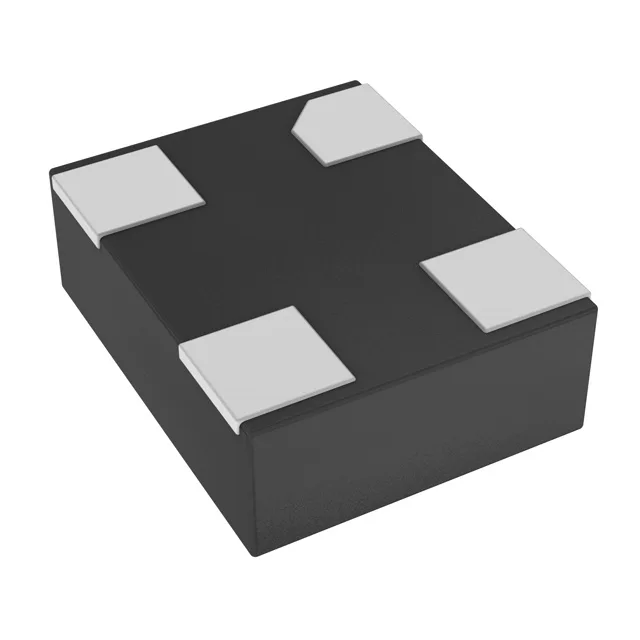
Microchip Technology DSC1001CI2-006.0000 — Crystals & Oscillators

DSC1001CI2-006.0000 – Microchip MEMS XO, 6MHz CMOS, AEC-Q100

MPNDSC1001CI2-006.0000
Active

Microchip Technology DSC1001CI2-006.0000, XO (Standard) oscillator, 6 MHz CMOS output, ±25ppm stability, 1.8V–3.3V supply, AEC-Q100 rated, 4-SMD no-lead package.

$0.9600Ref. price · indicative, final on quote
Independent supplier — new & surplus stockAuthenticity-screened · ESD-safe packingListing updated Aug 2026

Specifications

DSC1001CI2-006.0000 specifications
ParameterValue
TypeXO (Standard)
SeriesDSC1001
MountingSurface Mount
Supply voltage1.8V ~ 3.3V
Current - supply6.3mA
Current - supply (Disable)15µA
Frequency6 MHz
Frequency stability±25ppm
Operating temperature-40°C~85°C
Size (Dimension)0.126\" L x 0.098\" W (3.20mm x 2.50mm)
Height - seated0.035\" (0.90mm)
OutputCMOS
PackageTube
RatingsAEC-Q100
FunctionEnable/Disable
Base resonatorMEMS
Case4-SMD, No Lead

Product details

Output is CMOS, rated for 6.3 mA max supply current at 6 MHz, with a disable mode that drops to 15 µA — enough to gate the clock on a sleeping CAN node without a separate enable switch.

The wide range saves a low-dropout regulator on a mixed-voltage board.

Package and enable function

Housed in a 4-SMD no-lead package measuring 3.20 mm x 2.50 mm with a seated height of 0.90 mm. That is useful for a power-cycled sensor node that wakes on an interrupt and needs the oscillator running only during the measurement window.

Frequently asked questions

What is the difference between DSC1001CI2-006.0000 and DSC1001CI2-012.0000?

The only difference is the output frequency: the -006.0000 suffix is 6 MHz, while -012.0000 would be 12 MHz. Both share the same DSC1001 series, same 1.8-3.3 V supply, same ±25 ppm stability, same AEC-Q100 grade, and same 4-SMD package. If your BOM calls for 6 MHz, the -006.0000 is the correct order code.

Can DSC1001CI2-006.0000 run on a 1.8 V supply?

Yes. The supply range is 1.8 V to 3.3 V, so it runs directly off a 1.8 V core rail without a regulator. The CMOS output swings rail-to-rail at 1.8 V, which is compatible with 1.8 V logic inputs.