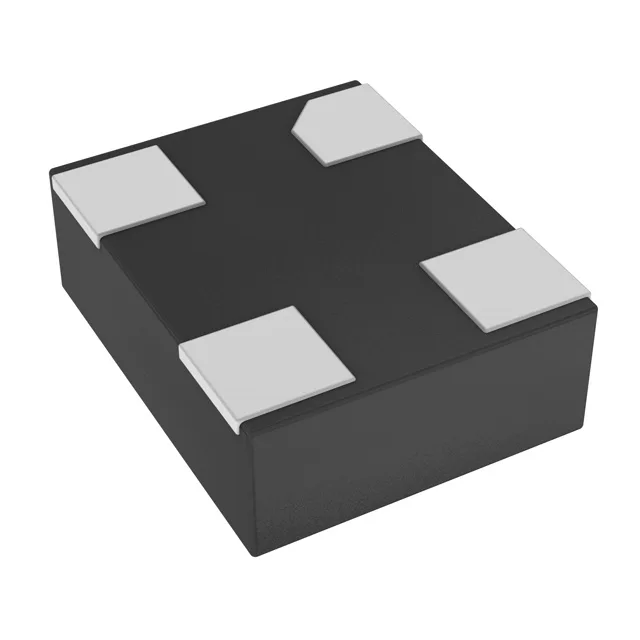
Microchip Technology DSC1001CI1-125.0000T — Crystals & Oscillators

DSC1001CI1-125.0000T MEMS Oscillator 125 MHz AEC-Q100

MPNDSC1001CI1-125.0000T
Active

Microchip Technology DSC1001CI1-125.0000T, XO (Standard) MEMS oscillator, 125 MHz CMOS output, ±50 ppm stability, AEC-Q100, -40°C to 85°C, 3.2mm x 2.5mm 4-SMD no-lead package.

Independent supplier — new & surplus stockAuthenticity-screened · ESD-safe packingListing updated Aug 2026

Specifications

DSC1001CI1-125.0000T specifications
ParameterValue
TypeXO (Standard)
SeriesDSC1001
MountingSurface Mount
Supply voltage1.8V ~ 3.3V
Current - supply8.7mA
Current - supply (Disable)15µA
Frequency125 MHz
Frequency stability±50ppm
Operating temperature-40°C~85°C
Size (Dimension)0.126\" L x 0.098\" W (3.20mm x 2.50mm)
Height - seated0.035\" (0.90mm)
OutputCMOS
PackageTape & Reel (TR)
RatingsAEC-Q100
FunctionStandby (Power Down)
Base resonatorMEMS
Case4-SMD, No Lead

Product details

The MEMS resonator construction provides inherent immunity to mechanical stress and microphonics compared to quartz-based oscillators, reducing frequency drift from board flex or vibration.

Supply voltage flexibility and power-down mode

Operating from a 1.8V to 3.3V supply rail, the oscillator can be powered directly from the core or I/O voltage of most MCUs and SoCs without an external regulator. Maximum supply current is 8.7 mA in active mode; the standby (power-down) function drops consumption to 15 µA max, controlled via a dedicated pin — useful for battery-backed or sleep-mode systems.

Frequently asked questions

Can the DSC1001CI1-125.0000T replace a standard quartz oscillator?

Yes — the DSC1001 series is designed as a drop-in replacement for standard quartz oscillators in the same 3.2mm x 2.5mm 4-SMD no-lead footprint. The MEMS resonator offers better shock and vibration tolerance than quartz, but the electrical interface (CMOS output, supply voltage range, enable/disable pin) is identical.

What is the difference between MEMS and quartz oscillators?

MEMS oscillators use a silicon micro-electromechanical resonator instead of a quartz crystal. They are inherently more resistant to mechanical shock, vibration, and board flex, and typically have shorter startup times. The DSC1001 series delivers ±50 ppm stability comparable to standard quartz XOs, with the added benefit of AEC-Q100 qualification.