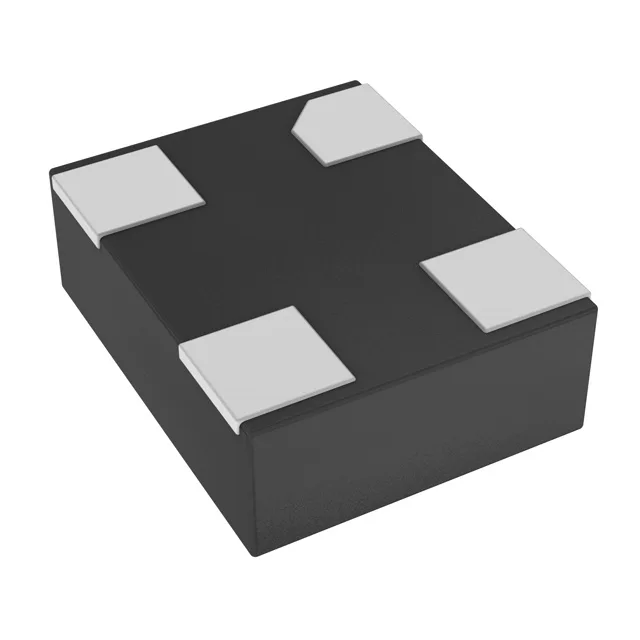
Microchip Technology DSC1001CI1-096.0000T — Crystals & Oscillators

DSC1001CI1-096.0000T – Microchip MEMS XO, 96 MHz, CMOS

MPNDSC1001CI1-096.0000T
Active

Microchip DSC1001CI1-096.0000T, XO (Standard), 96 MHz, CMOS output, MEMS resonator, 1.8V–3.3V supply, ±50 ppm stability, -40°C to 85°C, AEC-Q100, 4-SMD no-lead package.

Independent supplier — new & surplus stockAuthenticity-screened · ESD-safe packingListing updated Aug 2026

Specifications

DSC1001CI1-096.0000T specifications
ParameterValue
TypeXO (Standard)
SeriesDSC1001
MountingSurface Mount
Supply voltage1.8V ~ 3.3V
Current - supply8.7mA
Current - supply (Disable)15µA
Frequency96 MHz
Frequency stability±50ppm
Operating temperature-40°C~85°C
Size (Dimension)0.126\" L x 0.098\" W (3.20mm x 2.50mm)
Height - seated0.035\" (0.90mm)
OutputCMOS
PackageTape & Reel (TR)
RatingsAEC-Q100
FunctionStandby (Power Down)
Base resonatorMEMS
Case4-SMD, No Lead

Product details

96 MHz MEMS oscillator with automotive qualification

The DSC1001CI1-096.0000T is a MEMS-based XO (Standard) from Microchip's DSC1001 series, delivering a 96 MHz CMOS output from a 4-SMD no-lead package measuring 3.20mm x 2.50mm.

Supply voltage and standby power budget

The supply voltage range spans 1.8V to 3.3V — a single BOM line covers both 1.8V-core and 3.3V-I/O domains, so you do not need separate oscillators for different voltage rails.

Frequently asked questions

Can the DSC1001CI1-096.0000T replace a quartz oscillator of the same frequency?

Functionally yes — it is a drop-in XO replacement for a 96 MHz quartz oscillator with CMOS output in the same 4-SMD footprint. The MEMS resonator offers better shock and vibration tolerance, and the ±50 ppm stability is comparable to a standard quartz XO. Confirm the supply voltage and standby pin mapping on your board before swapping.

What does the Standby (Power Down) function do on this oscillator?

When the Standby pin is asserted, the oscillator stops and the output goes into high-impedance. The disable current is 15 µA max — low enough to leave the part powered in a sleep state without draining the supply rail. This is useful for battery-powered systems that need to wake the clock quickly.