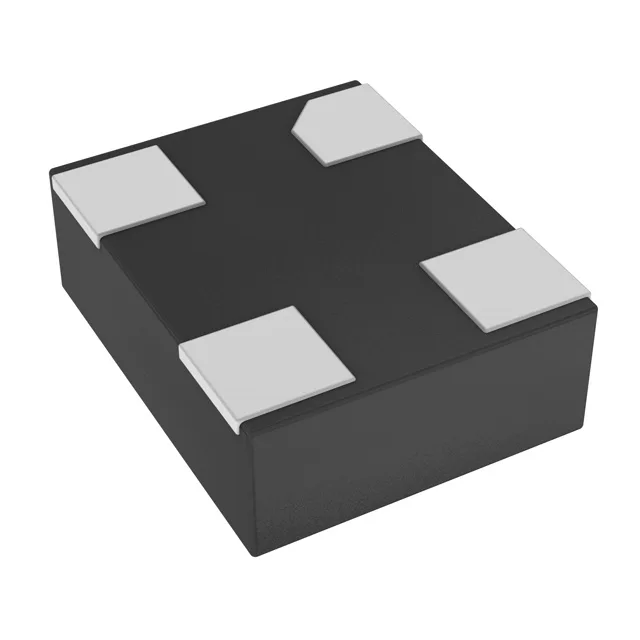
Microchip Technology DSC1001CI1-026.0000T — Crystals & Oscillators

DSC1001CI1-026.0000T MEMS XO, 26 MHz, AEC-Q100, CMOS Output

MPNDSC1001CI1-026.0000T
Active

Microchip Technology DSC1001CI1-026.0000T, XO (Standard) MEMS oscillator, 26 MHz, CMOS output, AEC-Q100 qualified, 1.8V–3.3V supply, -40°C to 85°C, 4-SMD no-lead package.

$0.9150Ref. price · indicative, final on quote
Independent supplier — new & surplus stockAuthenticity-screened · ESD-safe packingListing updated Aug 2026

Specifications

DSC1001CI1-026.0000T specifications
ParameterValue
TypeXO (Standard)
SeriesDSC1001
MountingSurface Mount
Supply voltage1.8V ~ 3.3V
Current - supply6.3mA
Current - supply (Disable)15µA
Frequency26 MHz
Frequency stability±50ppm
Operating temperature-40°C~85°C
Size (Dimension)0.126\" L x 0.098\" W (3.20mm x 2.50mm)
Height - seated0.035\" (0.90mm)
OutputCMOS
PackageTape & Reel (TR)
RatingsAEC-Q100
FunctionStandby (Power Down)
Base resonatorMEMS
Case4-SMD, No Lead

Product details

The DSC1001CI1-026.0000T is a 26 MHz MEMS-based XO (Standard) oscillator from Microchip's DSC1001 series, qualified to AEC-Q100 — the automotive IC reliability standard. The supply range covers all three common voltages, so the same BOM line can serve multiple board variants by changing only the supply rail.

Temperature range and standby power

This is the key spec for battery-backed modules or always-on ECUs that must preserve the coin cell or supercap during ignition-off periods.

The 4-SMD, No Lead package measures 3.20 mm x 2.50 mm with a seated height of 0.90 mm — a standard 3.2 x 2.5 mm footprint shared by many MEMS and quartz oscillators. The no-lead land pattern keeps the parasitic inductance low, which matters for the CMOS edge rate at 26 MHz.

Frequently asked questions

Is the DSC1001CI1-026.0000T AEC-Q100 qualified for automotive use?

Yes, the part carries an AEC-Q100 rating, which means it has passed the automotive-grade reliability stress tests (temperature cycling, ESD, latch-up) and is suitable for under-hood or cabin deployment where the ambient temperature stays within -40°C to 85°C.