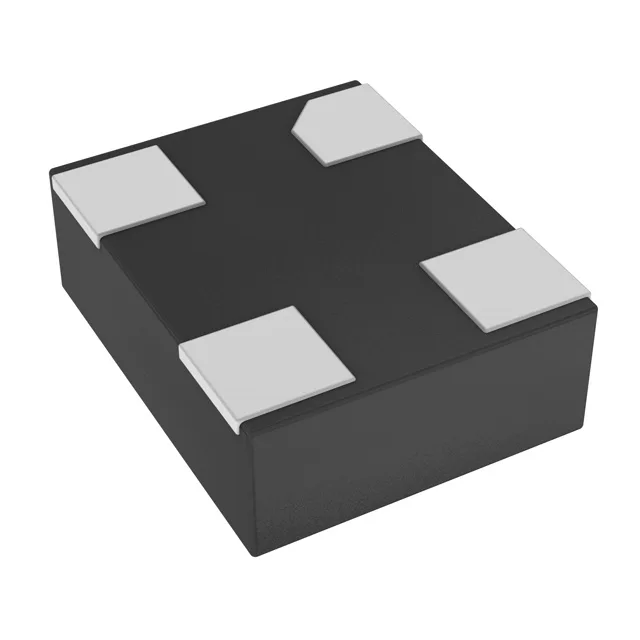
Microchip Technology DSC1001CI1-014.3180 — Crystals & Oscillators

DSC1001CI1-014.3180 MEMS Oscillator – AEC-Q100, 14.318 MHz

MPNDSC1001CI1-014.3180
Active

Microchip DSC1001CI1-014.3180, XO (Standard) MEMS oscillator, 14.318 MHz CMOS output, ±50 ppm stability, -40°C to 85°C, AEC-Q100, 4-SMD no-lead package.

Independent supplier — new & surplus stockAuthenticity-screened · ESD-safe packingListing updated Aug 2026

Specifications

DSC1001CI1-014.3180 specifications
ParameterValue
TypeXO (Standard)
SeriesDSC1001
MountingSurface Mount
Supply voltage1.8V ~ 3.3V
Current - supply6.3mA
Current - supply (Disable)15µA
Frequency14.318 MHz
Frequency stability±50ppm
Operating temperature-40°C~85°C
Size (Dimension)0.126\" L x 0.098\" W (3.20mm x 2.50mm)
Height - seated0.035\" (0.90mm)
OutputCMOS
PackageTube
RatingsAEC-Q100
FunctionStandby (Power Down)
Base resonatorMEMS
Case4-SMD, No Lead

Product details

The DSC1001CI1-014.3180 is a MEMS-based XO (Standard) oscillator from Microchip, delivering a 14.318 MHz CMOS output with ±50 ppm frequency stability.

Housed in a 4-SMD, no-lead package measuring 3.20 mm x 2.50 mm with a seated height of 0.90 mm, the DSC1001CI1-014.3180 fits standard oscillator footprints. The surface-mount package requires no through-hole vias for the body, though the four pads should be connected to a solid ground plane on the inner layers for thermal and EMI management.

Frequently asked questions

Is DSC1001CI1-014.3180 AEC-Q100 qualified?

Yes, the DSC1001CI1-014.3180 carries AEC-Q100 qualification, meaning it has passed automotive-grade reliability stress tests including temperature cycling, ESD, and latch-up. This qualifies it for under-hood and cabin applications where the ambient temperature can reach 85°C.

What is the standby function on DSC1001CI1-014.3180?

The standby (power-down) function disables the output and reduces supply current to 15 µA max. The oscillator resumes normal operation within the start-up time after the standby signal is de-asserted. This is useful for battery-powered systems that need to shut down the clock tree during sleep modes.