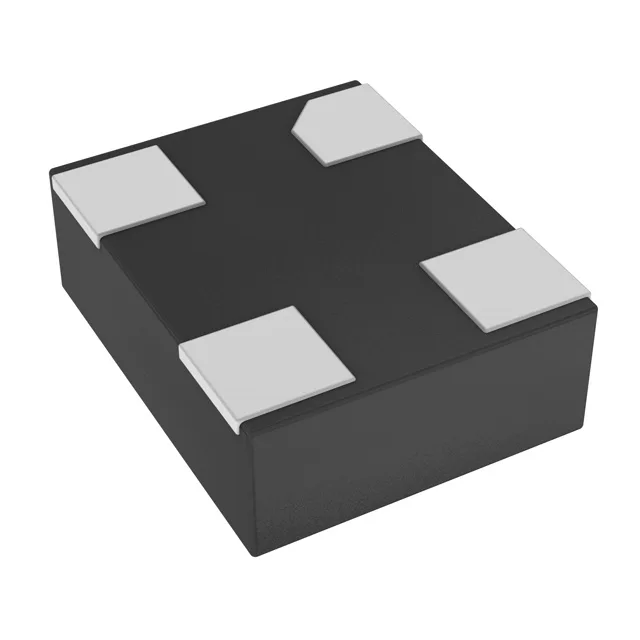
Microchip Technology DSC1001CE2-024.5760 — Crystals & Oscillators

DSC1001CE2-024.5760 MEMS Oscillator – 24.576 MHz, AEC-Q100

MPNDSC1001CE2-024.5760
Active

Microchip DSC1001CE2-024.5760, XO (Standard) MEMS oscillator, 24.576 MHz fixed frequency, CMOS output, ±25 ppm stability, 1.8V–3.3V supply, AEC-Q100 rated, -20°C to +70°C, 4-SMD no-lead package.

Sourced new & surplus through independent channelsAuthenticity-screened · ESD-safe packingListing updated Aug 2026

Specifications

DSC1001CE2-024.5760 specifications
ParameterValue
TypeXO (Standard)
SeriesDSC1001
MountingSurface Mount
Voltage1.8V ~ 3.3V
Current - supply6.3mA
Current - supply (Disable)15µA
Frequency24.576 MHz
Frequency stability±25ppm
Operating temperature-20°C~70°C
Size (Dimension)0.126\" L x 0.098\" W (3.20mm x 2.50mm)
Height - seated0.035\" (0.90mm)
OutputCMOS
PackageTube
RatingsAEC-Q100
FunctionStandby (Power Down)
Base resonatorMEMS
Case4-SMD, No Lead

Product details

What this MEMS oscillator does on your board

The MEMS resonator is sealed inside the package, so it resists shock and vibration better than a quartz crystal in the same 3.2 mm × 2.5 mm footprint. It runs from a single 1.8 V to 3.3 V supply, which means one part number covers both 1.8 V and 3.3 V logic domains — useful when a board has mixed-voltage interfaces and you want to avoid stocking two oscillators.

Automotive-grade timing for cabin and infotainment

The MEMS construction also survives the vibration profile of an automotive environment better than a quartz crystal. The ±25 ppm frequency stability is tight enough for a 24.576 MHz reference clock feeding an audio codec (common sample-rate clock) or a USB controller — no external trimming required.

Microchip lists the DSC1001CE2-024.5760 as Active.

Frequently asked questions

Does DSC1001CE2-024.5760 work with a 1.8 V supply?

Yes — the supply voltage range is 1.8 V to 3.3 V. The oscillator generates a CMOS output that swings rail-to-rail, so at 1.8 V Vdd the output is 1.8 V logic, compatible with 1.8 V MCUs and FPGAs.