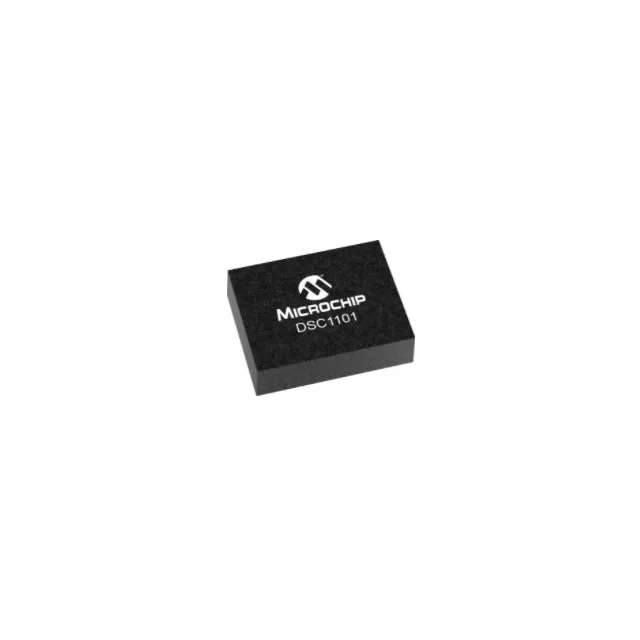
Microchip Technology DSC1001CE2-013.5600 — Crystals & Oscillators

DSC1001CE2-013.5600 MEMS Oscillator – Microchip, 13.56 MHz

MPNDSC1001CE2-013.5600
Active

Microchip Technology DSC1001CE2-013.5600, XO (Standard) MEMS oscillator, CMOS output, 13.56 MHz, ±25 ppm stability, 1.8V–3.3V supply, AEC-Q100 qualified, 4-VDFN package.

Independent supplier — new & surplus stockAuthenticity-screened · ESD-safe packingListing updated Aug 2026

Specifications

DSC1001CE2-013.5600 specifications
ParameterValue
TypeXO (Standard)
SeriesDSC1001
MountingSurface Mount
Supply voltage1.8V ~ 3.3V
Current - supply8mA
Current - supply (Disable)15µA
Frequency13.56 MHz
Frequency stability±25ppm
Operating temperature-20°C~70°C
Size (Dimension)0.126\" L x 0.098\" W (3.20mm x 2.50mm)
Height - seated0.035\" (0.90mm)
OutputCMOS
PackageTube
RatingsAEC-Q100
FunctionStandby (Power Down)
Base resonatorMEMS
Case4-VDFN

Product details

The DSC1001CE2-013.5600 is a MEMS-based XO (Standard) from Microchip's DSC1001 series, delivering a 13.56 MHz CMOS output with ±25 ppm frequency stability across its -20°C to 70°C operating range. The 1.8V to 3.3V supply range lets it run from a single rail in mixed-voltage designs, and the standby (power-down) function drops current to 15 µA max for sleep-mode power savings.

No direct replacement or successor is recorded; the DSC1001 series shares the same base product number, so a different frequency or stability variant would require a new order code.

4-VDFN package and board integration

Housed in a 4-VDFN package measuring 3.20 mm x 2.50 mm with a 0.90 mm seated height, the oscillator fits compact PCB layouts and low-profile enclosures.

Frequently asked questions

Is the DSC1001CE2-013.5600 AEC-Q100 qualified?

Yes, the DSC1001CE2-013.5600 carries an AEC-Q100 rating, qualifying it for automotive-grade applications.

How does the DSC1001CE2-013.5600 compare to a quartz crystal oscillator?

As a MEMS-based oscillator, the DSC1001CE2-013.5600 offers faster start-up, better shock and vibration tolerance, and a smaller footprint than a quartz crystal oscillator at the same frequency. The trade-off is that the MEMS oscillator is a complete timing module (no external load capacitors needed), whereas a quartz crystal requires external components and careful PCB layout.