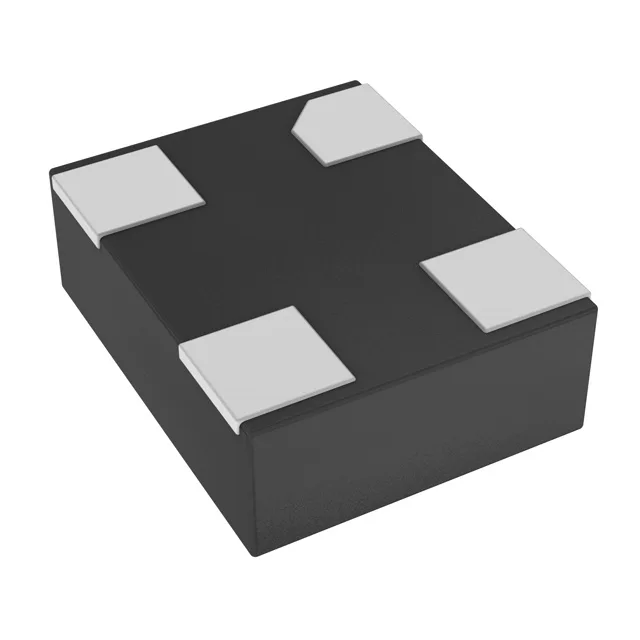
Microchip Technology DSC1001CE2-001.8432T — Crystals & Oscillators

DSC1001CE2-001.8432T MEMS Oscillator – 1.8432 MHz, AEC-Q100

MPNDSC1001CE2-001.8432T
Active

Microchip DSC1001CE2-001.8432T, XO (Standard) MEMS oscillator, 1.8432 MHz CMOS output, ±25 ppm stability, AEC-Q100 qualified, 4-SMD package.

Independent supplier — new & surplus stockAuthenticity-screened · ESD-safe packingListing updated Aug 2026

Specifications

DSC1001CE2-001.8432T specifications
ParameterValue
TypeXO (Standard)
SeriesDSC1001
MountingSurface Mount
Supply voltage1.8V ~ 3.3V
Current - supply6.3mA
Current - supply (Disable)15µA
Frequency1.8432 MHz
Frequency stability±25ppm
Operating temperature-20°C~70°C
Size (Dimension)0.126\" L x 0.098\" W (3.20mm x 2.50mm)
Height - seated0.035\" (0.90mm)
OutputCMOS
PackageTape & Reel (TR)
RatingsAEC-Q100
FunctionStandby (Power Down)
Base resonatorMEMS
Case4-SMD, No Lead

Product details

Automotive-grade MEMS timing for serial buses

The DSC1001CE2-001.8432T is a MEMS-based XO (Standard) oscillator from Microchip's DSC1001 series, delivering a fixed 1.8432 MHz CMOS output with ±25 ppm frequency stability. Its AEC-Q100 qualification places it in the automotive temperature grade, suitable for under-hood and chassis-domain applications where quartz oscillators would require additional screening. The 1.8432 MHz frequency is a classic baud-rate generator for UART and CAN serial interfaces, so this part fits directly into existing 1.8432 MHz clock trees without a PLL.

The supply voltage range of 1.8V to 3.3V covers the common 1.8V, 2.5V, and 3.3V rails found in automotive ECUs and industrial controllers, eliminating the need for a dedicated LDO for the oscillator.

Frequently asked questions

Is the DSC1001CE2-001.8432T a direct drop-in replacement for a quartz crystal oscillator at 1.8432 MHz?

Yes, in most designs. The DSC1001CE2-001.8432T is a MEMS-based XO with CMOS output and a standard 4-SMD, No Lead footprint — the same footprint as many quartz oscillators. The supply voltage range (1.8V to 3.3V) and ±25 ppm stability match or exceed typical quartz oscillator specs. The key difference is the MEMS resonator's higher shock and vibration tolerance, which is why it carries AEC-Q100 qualification. Verify the output drive strength and load capacitance in your specific circuit, but the pinout and electrical interface are directly compatible.