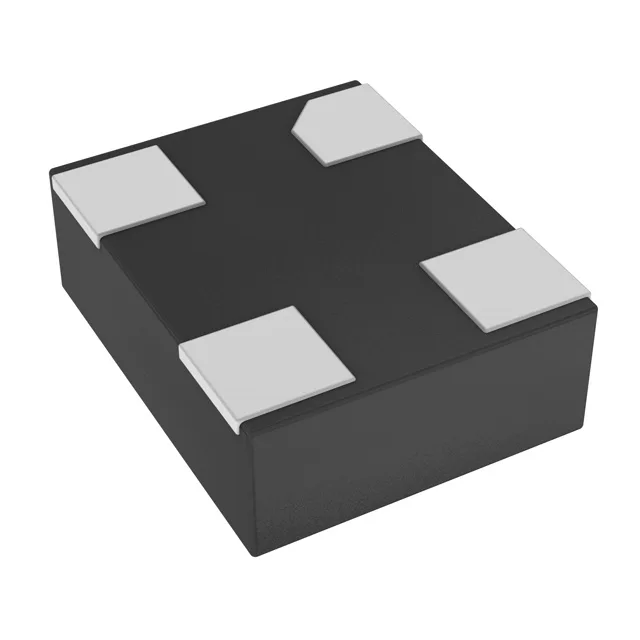
Microchip Technology DSC1001CE1-020.0000T — Crystals & Oscillators

DSC1001CE1-020.0000T MEMS XO – 20 MHz, CMOS, AEC-Q100

MPNDSC1001CE1-020.0000T
Active

Microchip Technology DSC1001CE1-020.0000T, XO (Standard), 20 MHz, CMOS output, MEMS base resonator, AEC-Q100 qualified, 4-SMD No Lead package.

$0.7100Ref. price · indicative, final on quote
Independent supplier — new & surplus stockAuthenticity-screened · ESD-safe packingListing updated Aug 2026

Specifications

DSC1001CE1-020.0000T specifications
ParameterValue
TypeXO (Standard)
SeriesDSC1001
MountingSurface Mount
Supply voltage1.8V ~ 3.3V
Current - supply6.3mA
Current - supply (Disable)15µA
Frequency20 MHz
Frequency stability±50ppm
Operating temperature-20°C~70°C
Size (Dimension)0.126\" L x 0.098\" W (3.20mm x 2.50mm)
Height - seated0.035\" (0.90mm)
OutputCMOS
PackageTape & Reel (TR)
RatingsAEC-Q100
FunctionStandby (Power Down)
Base resonatorMEMS
Case4-SMD, No Lead

Product details

MEMS-based 20 MHz XO with AEC-Q100 qualification

The DSC1001CE1-020.0000T is a 20 MHz MEMS-based oscillator from Microchip's DSC1001 series, delivering a CMOS output from a 1.8V to 3.3V supply rail. Its AEC-Q100 rating makes it a fit for automotive electronics where quartz oscillators often fail under vibration or temperature cycling.

Operating over -20°C to 70°C with ±50 ppm stability, it covers most indoor and automotive cabin applications without needing a wider-temperature variant.

Frequently asked questions

Is the DSC1001CE1-020.0000T AEC-Q100 qualified?

Yes, the DSC1001CE1-020.0000T carries an AEC-Q100 rating, qualifying it for automotive-grade applications including under-hood and cabin domains.

What supply voltage range does the DSC1001CE1-020.0000T support?

It operates from 1.8V to 3.3V, covering common logic and processor supply rails without an external regulator.

How does the DSC1001CE1-020.0000T compare to a standard quartz oscillator?

The MEMS base resonator gives better shock and vibration tolerance compared to quartz, and the AEC-Q100 qualification adds reliability screening that standard quartz oscillators typically lack.

What does the Standby (Power Down) function do?

When the standby pin is asserted, the oscillator stops and draws only 15 µA max, allowing the system to cut clock power during sleep modes.